- English
- French
- German
- Portuguese
- Spanish
- Russian
- Japanese
- Korean
- Arabic
- Greek
- German
- Turkish
- Italian
- Danish
- Romanian
- Indonesian
- Czech
- Afrikaans
- Swedish
- Polish
- Basque
- Catalan
- Esperanto
- Hindi
- Lao
- Albanian
- Amharic
- Armenian
- Azerbaijani
- Belarusian
- Bengali
- Bosnian
- Bulgarian
- Cebuano
- Chichewa
- Corsican
- Croatian
- Dutch
- Estonian
- Filipino
- Finnish
- Frisian
- Galician
- Georgian
- Gujarati
- Haitian
- Hausa
- Hawaiian
- Hebrew
- Hmong
- Hungarian
- Icelandic
- Igbo
- Javanese
- Kannada
- Kazakh
- Khmer
- Kurdish
- Kyrgyz
- Latin
- Latvian
- Lithuanian
- Luxembou..
- Macedonian
- Malagasy
- Malay
- Malayalam
- Maltese
- Maori
- Marathi
- Mongolian
- Burmese
- Nepali
- Norwegian
- Pashto
- Persian
- Punjabi
- Serbian
- Sesotho
- Sinhala
- Slovak
- Slovenian
- Somali
- Samoan
- Scots Gaelic
- Shona
- Sindhi
- Sundanese
- Swahili
- Tajik
- Tamil
- Telugu
- Thai
- Ukrainian
- Urdu
- Uzbek
- Vietnamese
- Welsh
- Xhosa
- Yiddish
- Yoruba
- Zulu
site level laser
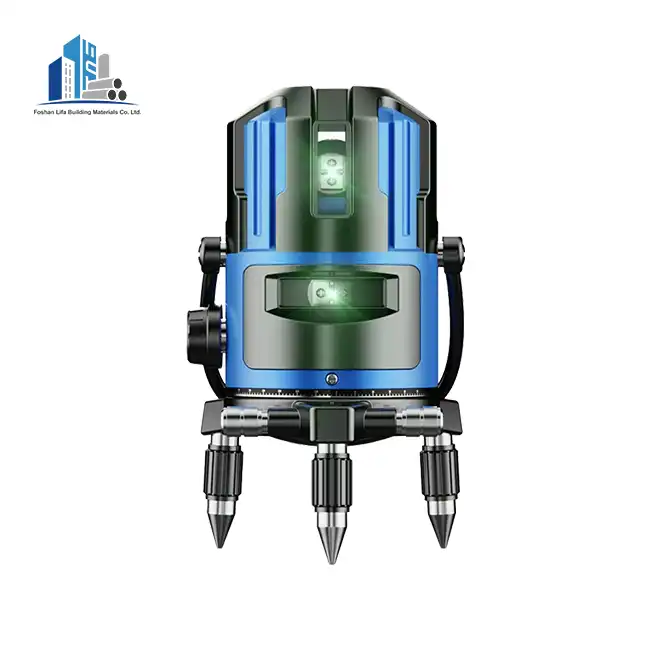
Exquisite craftsmanship ensures more accurate measurement.
Alarm reminder: the equipment automatically alarms when the surface is uneven.
Site Level Laser for Construction Grading — Precision Rotary Leveling Solution with Freeze & Drop Resistance
A site level laser is a professional rotary leveling instrument that projects a 360-degree laser beam to establish accurate horizontal reference planes across large construction and surveying areas. Foshan Lifa Building Materials Co., Ltd. supplies this product with a thickened base and rotating body designed to be both freeze-resistant and drop-resistant, offering enhanced durability in demanding field conditions. The unit features an automatic alarm when the surface is uneven, ensuring immediate feedback during setup. Accuracy reaches ±1/8 inch per 100 feet, with working ranges up to 4,000 feet diameter using a detector, meeting ISO 9001, ASTM, and DIN quality standards.
What Makes This Rotary Laser Level Stand Out?
The design of this laser level prioritizes both precision and physical durability — two qualities that matter most on active job sites.
The thickened base provides a stable platform that resists tipping and absorbs ground-level impacts. The rotating body is reinforced to handle repeated handling, transport vibration, and accidental drops from up to 5 feet without losing calibration.
Freeze resistance means the unit remains operational in temperatures as low as -20°F (-29°C), making it suitable for winter construction projects where ordinary instruments fail.
The automatic alarm system triggers immediately when the surface is uneven, alerting operators before measurements are recorded. This removes the guesswork from setup and reduces costly rework caused by undetected leveling errors.

Technical Specifications
|
Parameter
|
Specification
|
|
Accuracy
|
±1/8 inch per 100 feet
|
|
Working Range (with detector)
|
Up to 4,000 feet diameter
|
|
Self-Leveling Range
|
±5° to ±8°
|
|
Rotation Speed
|
0 – 600 RPM (variable)
|
|
Operating Temperature
|
-20°F to +140°F (-29°C to +60°C)
|
|
Drop Resistance
|
Up to 5 feet
|
|
Weatherproof Rating
|
IP65/IP67
|
|
Battery Life
|
40 – 100 hours
|
|
Beam Color Options
|
Red (635nm) / Green (532nm)
|
|
Quality Standards
|
ISO 9001, ASTM, DIN, ISO 17123
|
|
Laser Safety
|
FCC Class 2
|
Key Product Features
Exquisite craftsmanship for measurement accuracy is built into every unit. The optical components are precision-assembled to maintain beam plane consistency across the full 360-degree rotation. This level of manufacturing quality ensures your measurements stay reliable over long working days.
The green beam option (532nm) is four times more visible than red in bright outdoor conditions, reducing detection issues caused by sunlight. When combined with a laser detector in pulse mode, the signal remains strong even in high-ambient-light environments.
Magnetic dampening allows the compensator to settle quickly after setup, cutting preparation time on each station. The self-leveling mechanism is effective within a ±5° to ±8° tilt range, making setup straightforward even on slightly uneven ground.
Application Scenarios
Large-Scale Excavation and Site Grading
This instrument is ideal for establishing consistent grade control across multi-acre sites. With accuracy maintained at ±1/8 inch over 2,000+ foot diameters, excavators can work continuously without repeated surveyor check-ins. It is especially valuable in utility trenching, parking lot preparation, and airport runway construction.
Foundation and Concrete Work
When setting concrete forms or monitoring pour levels, deviations beyond 1/4 inch can create structural problems. The 360-degree reference plane lets multiple trades work from the same elevation datum simultaneously, which can reduce rework costs by up to 40% and improve coordination across crews.
Agricultural Land Leveling
Precision agriculture drainage systems require slopes accurate to 0.1% grade across fields spanning 40+ acres. Environmental factors like wind, dust, and temperature changes can compromise traditional surveying methods. This site level laser's environmental compensation and extended detection range make it a reliable choice for large-scale field preparation.

Quality Control Standards
Every unit undergoes rigorous inspection before shipment. Accuracy is verified to ±1/8 inch at 100 feet through ISO 17123-3 compliant testing, including temperature compensation checks across the full operating range.
Durability testing includes controlled drop tests simulating real field handling, IP rating validation through dust ingress and water immersion testing, and temperature cycling tests to confirm there is no calibration loss after exposure to extreme conditions.
Electronic components are evaluated through accelerated aging tests that assess battery performance consistency and charging system integrity. Vibration resistance testing simulates proximity to construction equipment such as compactors and pile drivers, ensuring the compensator system remains stable during active site work.
Foshan Lifa Building Materials Co., Ltd. applies full-process quality control from raw materials through to finished products, supporting consistent quality across bulk orders.
B2B Purchasing Advantages
If you are sourcing from Foshan Lifa Building Materials Co., Ltd, you will have a one-stop building hardware procurement platform covering hardware tools, fire-fighting electromechanical equipment, bathroom plumbing and decorative materials from a single provider.
These solutions together minimize procurement complexity, make supplier management easier and lower your total sourcing expenses. Whether you purchase one product category or numerous lines of building hardware, you deal with one team and one quality system.
The company's dependable large-scale supply capabilities serves standard orders and higher-volume procurement demands, underpinned by conformance to ISO 9001, ASTM standards and DIN standards.

FAQ
Q: How can I be sure the product is still accurate?
A: Conduct a two-peg test monthly on a 200-foot baseline. Set the laser at the halfway point , and mark heights at either end . Then move the laser to one end , and re-measure . A deviation of more than ±1/8 inch shows a drift in the calibration and professional servicing must be performed according to ISO 17123.
Q: Why does my laser struggle in bright sunlight?
A: Decrease in receiver sensitivity up to 75% due to sunlight. Switch to a green beam (532nm), use detector glasses or set the detector to pulse mode. Temporary shade screens close to the receiver can assist in identification of signals.
Q: Why does the laser lose self-leveling on some jobsites?
A: The compensator is subject to upset by vibration from neighboring compactors or pile drivers. Either move the laser at least 50 feet away from the source, use vibration-dampening mounting plates or switch to manual leveling mode and re-check accuracy every 30 minutes.
Q: How does the accuracy alter with temperature during the day?
A: Instrument expansion and air refraction are both temperature dependent. Whenever the temperature varies more than 20 degrees F from your first reading, recheck your setup – especially important when concrete construction requires tolerances of ±1/16 inch.
Q: What's the maintenance schedule?
A: Clean optical components weekly with approved solutions, verify accuracy monthly, condition batteries quarterly, and send the unit for factory calibration annually. Documented maintenance maintains the original accuracy criteria and keeps the instrument in service for 8 to 10 years.
Q: What is the working range of this product with a detector?
A: When utilized with a matching laser detector the working range is 4,000 feet in diameter. This makes it appropriate for large scale excavation, agricultural leveling and airport runway projects.
Contact Us
Ready to source with site level laser? Email us at wz@jiancaiqy.com — Foshan Lifa Building Materials Co., Ltd. is ready to support your procurement needs.
Learn about our latest products and discounts through SMS or email