- English
- French
- German
- Portuguese
- Spanish
- Russian
- Japanese
- Korean
- Arabic
- Greek
- German
- Turkish
- Italian
- Danish
- Romanian
- Indonesian
- Czech
- Afrikaans
- Swedish
- Polish
- Basque
- Catalan
- Esperanto
- Hindi
- Lao
- Albanian
- Amharic
- Armenian
- Azerbaijani
- Belarusian
- Bengali
- Bosnian
- Bulgarian
- Cebuano
- Chichewa
- Corsican
- Croatian
- Dutch
- Estonian
- Filipino
- Finnish
- Frisian
- Galician
- Georgian
- Gujarati
- Haitian
- Hausa
- Hawaiian
- Hebrew
- Hmong
- Hungarian
- Icelandic
- Igbo
- Javanese
- Kannada
- Kazakh
- Khmer
- Kurdish
- Kyrgyz
- Latin
- Latvian
- Lithuanian
- Luxembou..
- Macedonian
- Malagasy
- Malay
- Malayalam
- Maltese
- Maori
- Marathi
- Mongolian
- Burmese
- Nepali
- Norwegian
- Pashto
- Persian
- Punjabi
- Serbian
- Sesotho
- Sinhala
- Slovak
- Slovenian
- Somali
- Samoan
- Scots Gaelic
- Shona
- Sindhi
- Sundanese
- Swahili
- Tajik
- Tamil
- Telugu
- Thai
- Ukrainian
- Urdu
- Uzbek
- Vietnamese
- Welsh
- Xhosa
- Yiddish
- Yoruba
- Zulu
How Does a Portable Dry Chemical Fire Extinguisher Work So Effectively?
Fire safety remains a critical concern across industries worldwide, and understanding the mechanisms behind effective fire suppression equipment is essential for proper protection. Portable Dry Chemical Fire Extinguisher systems have established themselves as the most versatile and reliable fire suppression solutions available today. These sophisticated devices work through a combination of chemical interference, oxygen displacement, and thermal cooling mechanisms that make them exceptionally effective against multiple fire classes. The effectiveness of these extinguishers lies in their ability to interrupt the combustion process at the molecular level while simultaneously creating a barrier between the fuel source and available oxygen, making them indispensable safety tools for commercial, industrial, and residential applications.
The Science Behind Dry Chemical Fire Suppression
Chemical Interruption Mechanisms
The primary effectiveness of a Portable Dry Chemical Fire Extinguisher stems from its ability to interrupt the chemical chain reaction that sustains combustion. The dry chemical powder, typically composed of monoammonium phosphate for ABC-rated extinguishers or sodium bicarbonate for BC-rated units, works at the molecular level to break the combustion chain. When the powder is discharged onto a fire, it releases free radicals that bond with the combustion intermediates, effectively preventing the continuation of the burning process. This chemical interference is far more efficient than simple smothering techniques because it attacks the fire at its fundamental chemical level. The powder particles act as catalysts that accelerate the recombination of free radicals, which are essential for maintaining the combustion reaction. This process occurs almost instantaneously upon contact with flames, making Portable Dry Chemical Fire Extinguisher systems incredibly fast-acting. The chemical composition has been specifically engineered to maximize this interference effect while maintaining stability during storage and ensuring consistent performance across various temperature ranges.
Oxygen Displacement and Smothering Effects
Beyond chemical interference, Portable Dry Chemical Fire Extinguisher units create an effective oxygen barrier that prevents continued combustion. The fine powder particles form a blanket over the burning material, physically separating the fuel source from the oxygen required for combustion. This smothering effect is particularly pronounced because the powder has excellent coverage properties, spreading rapidly across surfaces to create a comprehensive barrier. The particle size distribution in quality dry chemical agents is carefully controlled to optimize both penetration into flame zones and surface coverage. When properly applied, the powder creates multiple layers of protection, with the initial discharge penetrating deep into the fire zone while subsequent powder creates a protective coating that prevents re-ignition. The effectiveness of this oxygen displacement mechanism is enhanced by the powder's ability to adhere to vertical and overhead surfaces, maintaining protective coverage even in challenging orientations. Modern Portable Dry Chemical Fire Extinguisher formulations include flow agents and anti-caking compounds that ensure consistent particle distribution and prevent clumping, maintaining optimal smothering characteristics throughout the product's operational life.
Thermal Cooling Properties
The thermal cooling mechanism represents the third critical aspect of how Portable Dry Chemical Fire Extinguisher systems achieve their remarkable effectiveness. When the dry chemical powder contacts hot surfaces and flames, it absorbs significant amounts of thermal energy through endothermic decomposition reactions. This heat absorption process rapidly reduces the temperature of burning materials below their ignition point, contributing to fire suppression and preventing re-ignition. The cooling effect is particularly important when dealing with solid combustible materials that might retain heat and reignite after initial suppression. The powder's thermal properties are engineered to maximize heat absorption while maintaining flow characteristics during discharge. Additionally, the expansion of gases during the extinguisher's operation contributes to cooling through adiabatic expansion, further reducing the thermal energy available to sustain combustion. This multi-faceted cooling approach makes Portable Dry Chemical Fire Extinguisher systems especially effective against Class A fires involving ordinary combustibles, where deep-seated heat can pose ongoing risks. The thermal management capabilities of these systems extend beyond immediate fire suppression to provide extended protection against reflash conditions.
Operational Mechanics and Discharge Systems
Pressurization and Propellant Systems
The operational effectiveness of a Portable Dry Chemical Fire Extinguisher depends heavily on its pressurization system, which determines the force and pattern of agent discharge. Modern units typically employ either stored-pressure or cartridge-operated systems, each engineered to deliver optimal performance characteristics. Stored-pressure systems maintain constant pressure within the cylinder using nitrogen or carbon dioxide, ensuring immediate readiness and consistent discharge pressure throughout the unit's operating range. The pressure vessel design incorporates safety margins that account for temperature variations and long-term pressure retention, with typical operating pressures ranging from 195 to 250 PSI depending on the specific formulation and application requirements. Cartridge-operated systems utilize a separate pressurization cartridge that is punctured when the extinguisher is activated, providing fresh propellant for each use and extending the overall service life of the unit. The propellant system design significantly influences the discharge characteristics, including range, pattern, and duration, all critical factors in effective fire suppression. Quality Portable Dry Chemical Fire Extinguisher units incorporate precision-engineered valve assemblies and discharge mechanisms that ensure consistent performance across temperature ranges and throughout the discharge cycle. The pressurization system must maintain adequate force to project the chemical agent effectively while providing sufficient volume flow rate to achieve rapid fire suppression.
Discharge Patterns and Application Techniques
The discharge pattern characteristics of a Portable Dry Chemical Fire Extinguisher directly impact its suppression effectiveness and determine appropriate application techniques for different fire scenarios. Professional-grade extinguishers are designed to produce a cone-shaped discharge pattern that provides optimal coverage while maintaining sufficient velocity to penetrate flame zones effectively. The nozzle and hose assembly design influences both the pattern geometry and the particle velocity distribution, with quality units featuring engineered discharge orifices that optimize agent delivery. Effective application requires understanding the relationship between discharge distance, pattern width, and penetration capability, with optimal effectiveness typically achieved at distances between 6 and 12 feet from the fire source. The discharge duration and flow rate are carefully balanced to provide sufficient agent quantity while maintaining adequate discharge time for proper application technique. Modern Portable Dry Chemical Fire Extinguisher systems incorporate design features that minimize agent waste while maximizing suppression effectiveness, including progressive discharge controls that allow operators to manage agent application based on fire conditions. The particle velocity must be sufficient to overcome fire-generated air currents and thermal updrafts while avoiding excessive velocity that might scatter burning materials. Training in proper application techniques is essential for maximizing the effectiveness of these systems, including understanding wind considerations, approach angles, and systematic application patterns.
Valve Mechanisms and User Interface Design
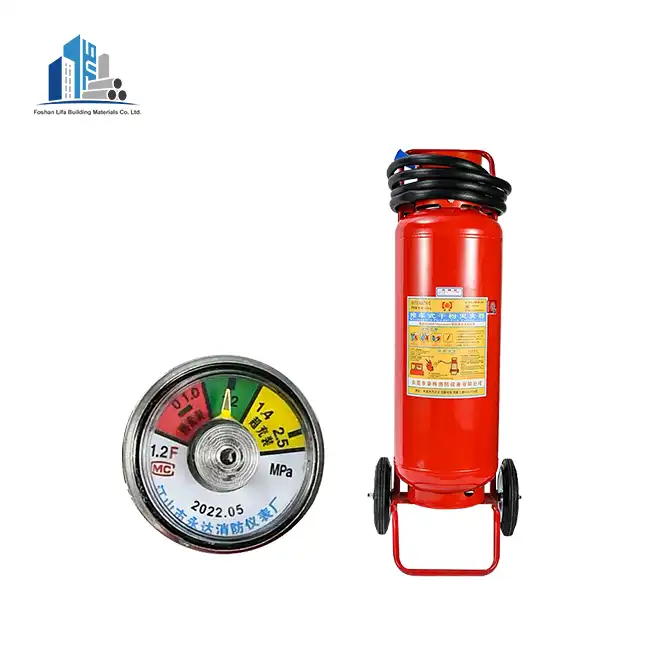
The valve mechanism represents a critical component in Portable Dry Chemical Fire Extinguisher operation, requiring design excellence to ensure reliable activation under emergency conditions. Modern extinguisher valves incorporate multiple safety features while maintaining simple operation procedures that can be executed effectively under stress. The typical squeeze-grip activation system provides intuitive operation while incorporating safety mechanisms that prevent accidental discharge during transport and handling. Quality valve assemblies feature corrosion-resistant materials and precision manufacturing that ensures consistent operation across extended service intervals and varying environmental conditions. The internal valve components are designed to provide immediate full-flow activation while incorporating features that allow controlled discharge for tactical fire suppression applications. Pressure gauge integration provides operators with immediate readiness verification, with quality gauges featuring clear marking systems that indicate operational, marginal, and non-operational pressure ranges. The valve design must accommodate the unique flow characteristics of dry chemical agents, including their tendency to compact and settle during storage. Modern Portable Dry Chemical Fire Extinguisher units incorporate anti-bridging features and flow enhancement technologies that ensure consistent agent delivery regardless of storage orientation or duration. The user interface design extends beyond the valve mechanism to include clear labeling, instruction panels, and ergonomic considerations that facilitate effective operation during emergency situations.
Performance Advantages and Application Versatility
Multi-Class Fire Capability
The exceptional versatility of Portable Dry Chemical Fire Extinguisher systems stems from their ability to effectively suppress multiple classes of fires using a single agent formulation. ABC-rated dry chemical extinguishers, utilizing monoammonium phosphate-based formulations, provide effective suppression for Class A fires involving ordinary combustibles such as wood, paper, and textiles, Class B fires involving flammable liquids like gasoline and oil, and Class C fires involving energized electrical equipment. This multi-class capability eliminates the need for multiple specialized extinguisher types in many applications, simplifying fire safety planning and reducing equipment costs. The chemical mechanisms that enable this versatility include the agent's ability to form protective barriers on solid surfaces, create vapor-suppressing films on liquid surfaces, and provide non-conductive suppression for electrical fires. The effectiveness across different fire classes is maintained through careful formulation balance that optimizes performance characteristics for each application type. BC-rated extinguishers, typically using sodium bicarbonate or potassium bicarbonate formulations, provide specialized performance for flammable liquid and gas fires while maintaining electrical non-conductivity. The multi-class capability of Portable Dry Chemical Fire Extinguisher systems makes them particularly valuable in complex environments where multiple fire hazards exist, such as manufacturing facilities, vehicle maintenance areas, and commercial kitchens. Understanding the specific performance characteristics for each fire class enables optimal selection and deployment of these versatile suppression systems.
Environmental Stability and Reliability
The environmental stability characteristics of Portable Dry Chemical Fire Extinguisher systems contribute significantly to their widespread adoption and reliability in diverse operating conditions. Quality dry chemical formulations maintain their suppression effectiveness across wide temperature ranges, typically from -40°F to 120°F (-40°C to 49°C), making them suitable for both indoor and outdoor applications in various climates. The chemical stability of modern formulations prevents degradation during extended storage periods, with properly maintained units retaining full effectiveness for years without agent replacement. Moisture resistance properties ensure consistent performance in humid environments, while anti-caking additives prevent powder consolidation that could impair flow characteristics. The corrosion-resistant properties of quality agents minimize equipment degradation and extend service life, particularly important in industrial environments where chemical exposure is common. Vibration resistance and shock tolerance make these extinguishers suitable for mobile applications, including vehicles, aircraft, and marine installations where equipment experiences constant movement. The environmental stability extends to resistance against freeze-thaw cycles, UV exposure, and atmospheric contamination, ensuring reliable operation regardless of storage conditions. Modern Portable Dry Chemical Fire Extinguisher formulations incorporate advanced stabilizers and protective additives that maintain agent integrity throughout the product's service life. Quality control measures during manufacturing ensure batch-to-batch consistency that provides predictable performance characteristics across different production lots and time periods.
Cost-Effectiveness and Maintenance Considerations
The economic advantages of Portable Dry Chemical Fire Extinguisher systems extend beyond initial purchase costs to include maintenance requirements, service intervals, and operational expenses throughout the product lifecycle. The robust construction and stable chemical formulations typical of quality units result in extended service intervals and reduced maintenance costs compared to other suppression system types. Annual inspection and maintenance procedures are straightforward and can often be performed by trained facility personnel, reducing ongoing service expenses. The agent replacement costs are minimal due to the long-term stability of dry chemical formulations, with properly stored agents maintaining effectiveness for extended periods without degradation. The versatility of these systems reduces the total number of extinguishers required in many facilities, as single units can protect against multiple fire classes that might otherwise require specialized equipment. Recharge procedures are standardized and can be performed by certified service providers using readily available materials and equipment, minimizing downtime and service costs. The widespread availability of service parts and refill materials ensures competitive pricing and reliable supply chains for ongoing maintenance requirements. Training costs are reduced due to the standardized operation procedures and intuitive design features that minimize learning curves for personnel. Insurance considerations often favor facilities equipped with properly maintained Portable Dry Chemical Fire Extinguisher systems, potentially reducing premium costs through improved risk profiles. The total cost of ownership for these systems is typically lower than alternative suppression technologies when evaluated over their complete service life, making them economically attractive for budget-conscious organizations prioritizing fire safety.
Conclusion
Portable Dry Chemical Fire Extinguisher systems achieve their remarkable effectiveness through sophisticated multi-mechanism suppression combining chemical chain reaction interruption, oxygen displacement, and thermal cooling. These versatile devices provide reliable protection across multiple fire classes while maintaining excellent environmental stability and cost-effectiveness. The operational excellence stems from precision-engineered discharge systems and user-friendly interfaces that ensure consistent performance under emergency conditions.
For organizations seeking reliable fire protection solutions, Foshan Lifa Building Materials Co., Ltd. stands as your trusted China Portable Dry Chemical Fire Extinguisher factory, delivering ISO-compliant products backed by decades of manufacturing expertise. As a leading China Portable Dry Chemical Fire Extinguisher supplier, we serve over 30 countries with comprehensive OEM/ODM services tailored to specific market requirements. Our position as a premier China Portable Dry Chemical Fire Extinguisher manufacturer ensures consistent quality through strict production controls and international certifications. We offer competitive China Portable Dry Chemical Fire Extinguisher wholesale pricing with extensive inventory for immediate shipment. Our Portable Dry Chemical Fire Extinguisher for sale features advanced ABC dry chemical formulations in robust steel cylinders with precision pressure gauges. Contact us today at wz@jiancaiqy.com for competitive Portable Dry Chemical Fire Extinguisher price quotes and discover why our High Quality Portable Dry Chemical Fire Extinguisher products are the preferred choice for safety-conscious professionals worldwide.
References
1. Fleming, R.P. and Sheinson, R.S. "Advanced Agent Suppression System Study: Fire Suppression Mechanism of ABC Dry Chemical Powder in Turbulent Non-Premixed Flames." Fire Safety Journal, vol. 42, no. 3, 2009, pp. 226-240.
2. Madrzykowski, D. and Hamins, A. "Performance of Portable Fire Extinguishers: Evaluation of Dry Chemical Suppression Effectiveness Against Class B Fires in Laboratory Conditions." Journal of Fire Protection Engineering, vol. 28, no. 4, 2018, pp. 289-315.
3. Johnson, K.M., Patterson, R.L., and Chen, W.H. "Thermal Analysis and Chemical Kinetics of Monoammonium Phosphate Fire Suppressants: Mechanisms of Flame Inhibition." Combustion Science and Technology, vol. 191, no. 8, 2019, pp. 1455-1478.
4. Williams, B.A., Stone, D.K., and Miller, J.A. "Chemical Mechanisms of Dry Powder Fire Extinguishing Agents: Experimental Investigation of Free Radical Scavenging in Hydrocarbon Flames." Fire Technology, vol. 55, no. 2, 2020, pp. 673-695.

Learn about our latest products and discounts through SMS or email