- English
- French
- German
- Portuguese
- Spanish
- Russian
- Japanese
- Korean
- Arabic
- Greek
- German
- Turkish
- Italian
- Danish
- Romanian
- Indonesian
- Czech
- Afrikaans
- Swedish
- Polish
- Basque
- Catalan
- Esperanto
- Hindi
- Lao
- Albanian
- Amharic
- Armenian
- Azerbaijani
- Belarusian
- Bengali
- Bosnian
- Bulgarian
- Cebuano
- Chichewa
- Corsican
- Croatian
- Dutch
- Estonian
- Filipino
- Finnish
- Frisian
- Galician
- Georgian
- Gujarati
- Haitian
- Hausa
- Hawaiian
- Hebrew
- Hmong
- Hungarian
- Icelandic
- Igbo
- Javanese
- Kannada
- Kazakh
- Khmer
- Kurdish
- Kyrgyz
- Latin
- Latvian
- Lithuanian
- Luxembou..
- Macedonian
- Malagasy
- Malay
- Malayalam
- Maltese
- Maori
- Marathi
- Mongolian
- Burmese
- Nepali
- Norwegian
- Pashto
- Persian
- Punjabi
- Serbian
- Sesotho
- Sinhala
- Slovak
- Slovenian
- Somali
- Samoan
- Scots Gaelic
- Shona
- Sindhi
- Sundanese
- Swahili
- Tajik
- Tamil
- Telugu
- Thai
- Ukrainian
- Urdu
- Uzbek
- Vietnamese
- Welsh
- Xhosa
- Yiddish
- Yoruba
- Zulu
How often should a dry chemical extinguisher be emptied and refilled?
Picture this scenario: A sudden electrical fire breaks out in your facility, and you rush to grab the Portable Dry Chemical Fire Extinguisher mounted on the wall. You pull the pin, aim at the base of the flames, and squeeze the handle, but nothing happens. The pressure gauge shows empty, and valuable seconds are wasted as the fire spreads. This nightmare situation happens more often than you might think, and it's completely preventable with proper maintenance knowledge. Understanding the correct refilling schedule for your Portable Dry Chemical Fire Extinguisher isn't just about regulatory compliance—it's about ensuring life-saving equipment functions when every second counts. According to industry standards, stored pressure dry chemical extinguishers must be emptied and subjected to internal inspection for recharging every six years, even if they haven't been used. However, immediate refilling is required after any use, regardless of how much agent was discharged, as even partial discharge can compromise the unit's pressure integrity and effectiveness.

Understanding Portable Dry Chemical Fire Extinguisher Maintenance Cycles
The maintenance requirements for your Portable Dry Chemical Fire Extinguisher follow a comprehensive schedule designed to ensure optimal performance throughout its service life. These requirements are not arbitrary—they're based on decades of fire safety research and are codified in standards like NFPA 10 and OSHA regulations. The six-year internal inspection and recharge requirement represents a critical milestone in the lifecycle of stored pressure dry chemical units. During this mandatory service, qualified technicians completely depressurize the extinguisher, remove all the dry chemical agent, and conduct a thorough internal examination of the cylinder, valve assembly, and discharge components. This process identifies potential issues such as internal corrosion, powder caking, or valve degradation that could prevent the Portable Dry Chemical Fire Extinguisher from functioning during an emergency. The cylinder is then cleaned, reassembled with fresh seals and gaskets, refilled with the appropriate amount of ABC dry chemical powder according to manufacturer specifications, and repressurized to the correct operating pressure of approximately 195 PSI. Additionally, a new service tag is attached documenting the date of service, the technician's identification, and the extinguisher's total weight, creating a permanent maintenance record that helps facility managers track compliance and schedule future servicing.
-
Monthly Visual Inspection Requirements
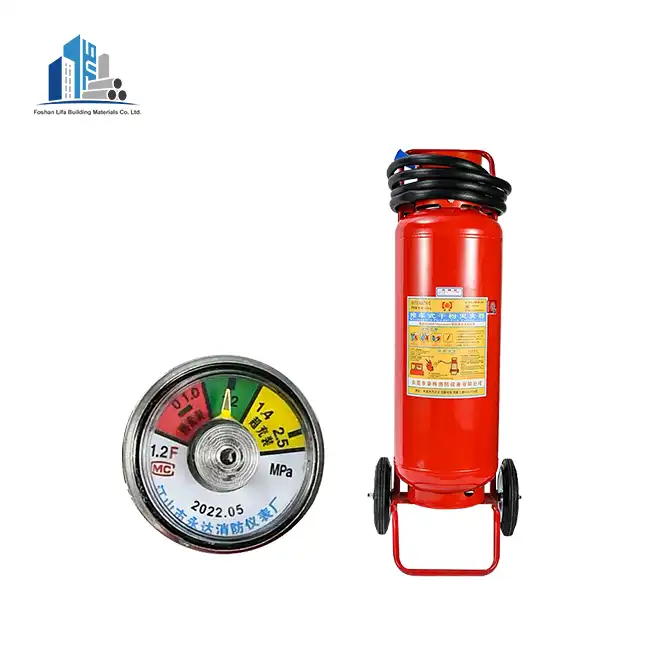
Between major servicing intervals, your Portable Dry Chemical Fire Extinguisher requires monthly visual inspections to catch developing problems before they become critical failures. During these monthly checks, designated personnel should verify that the extinguisher is in its assigned location, readily accessible, and not blocked by equipment or materials. The pressure gauge must be examined to ensure the needle remains in the green operating range, typically between 100-195 PSI, as pressure loss can occur gradually through micro-leaks in valve seals or cylinder walls. The inspection should include checking the safety pin and tamper seal for integrity, examining the discharge hose and nozzle for cracks, blockages, or damage, and inspecting the cylinder body for signs of physical damage, corrosion, or dents that could weaken its structural integrity. Any extinguisher showing low pressure, visible damage, or missing components should be immediately removed from service and sent for professional evaluation and recharging. Documentation of these monthly inspections is essential not only for regulatory compliance but also for establishing patterns that might indicate systemic issues, such as consistently decreasing pressure in units located in high-vibration areas or corrosive environments. The Portable Dry Chemical Fire Extinguisher units manufactured by quality suppliers like Foshan Lifa Building Materials Co., Ltd. feature high-precision pressure gauges that make these monthly checks straightforward, with clear color-coded zones that instantly communicate the unit's readiness status to non-technical personnel.
-
Annual Maintenance and Professional Inspection
Annual maintenance by a certified fire equipment professional represents another critical layer in the comprehensive care program for your Portable Dry Chemical Fire Extinguisher. This yearly service goes beyond visual inspection to include hands-on assessment of all operational components. Trained technicians examine the discharge valve mechanism for smooth operation, check the internal dip tube for blockages caused by compacted powder, verify the condition of all seals and o-rings, and conduct conductivity testing on the discharge hose to ensure safe operation. They also verify that the extinguisher's external labeling remains legible and accurate, with clear operating instructions and hazard warnings visible to potential users. The annual inspection provides an opportunity to identify units approaching their six-year internal inspection deadline, allowing facility managers to plan proactive servicing rather than discovering expired units during an emergency. Quality Portable Dry Chemical Fire Extinguisher units feature durable steel construction with corrosion-resistant coatings that minimize degradation between annual inspections, but environmental factors like salt air in coastal facilities, chemical vapors in industrial settings, or extreme temperature fluctuations can accelerate wear and necessitate more frequent professional evaluation. During annual service, technicians may also recommend upgrades or replacements for older units that, while still functional, may lack modern safety features or use outdated extinguishing agents, ensuring your fire protection system remains state-of-the-art.
Immediate Refilling Requirements After Discharge
One of the most critical yet often misunderstood aspects of Portable Dry Chemical Fire Extinguisher maintenance is the absolute requirement for immediate refilling after any discharge, even if the unit was only partially used. This requirement exists because the discharge of even a small amount of agent compromises the pressure seal integrity and can cause the dip tube to become clogged with residual powder that hardens when exposed to atmospheric moisture. When a Portable Dry Chemical Fire Extinguisher is activated, the sudden pressure release can disturb the dry chemical powder, causing it to settle and compact in ways that may obstruct the discharge path during subsequent use. Additionally, the valve stem o-rings, which maintain the pressure seal, can shift or become scored during discharge, creating micro-leaks that gradually depressurize the unit over subsequent days or weeks. Facility managers sometimes make the dangerous mistake of leaving partially discharged extinguishers in service, reasoning that "most of the powder is still inside," but this approach creates a false sense of security. A partially charged Portable Dry Chemical Fire Extinguisher may have insufficient pressure to propel the remaining agent effectively, resulting in weak discharge patterns with inadequate range and insufficient powder delivery to suppress a growing fire. Professional refilling after any use ensures the unit is completely disassembled, thoroughly cleaned of contaminated powder, inspected for discharge-related damage, reassembled with fresh components, filled to the correct agent weight, and pressurized to full operating specifications. The refilling process also provides an opportunity to identify any defects that may have developed during the discharge event, such as cracked discharge mechanisms, damaged pressure gauges, or weakened cylinder walls that could fail during the next emergency deployment.
-
The Dangers of Delaying Post-Use Servicing
Postponing the servicing of a used Portable Dry Chemical Fire Extinguisher creates cascading safety hazards that extend far beyond the compromised unit itself. When personnel see an extinguisher mounted in its designated location, they naturally assume it's fully functional and ready for immediate deployment. A used but unreplaced extinguisher creates a dangerous illusion of protection, potentially leading responders to waste precious seconds attempting to use an ineffective unit while a small, manageable fire grows into a major incident requiring evacuation and professional firefighting response. In commercial and industrial settings, this delay can result in significant property damage, business interruption, worker injuries, and potential liability exposure for the organization. The dry chemical powder remaining in a partially discharged Portable Dry Chemical Fire Extinguisher can absorb atmospheric moisture through imperfect seals, causing it to clump, cake, and harden into unusable masses that completely block the discharge mechanism. This moisture absorption also initiates chemical changes in some dry powder formulations, potentially reducing their fire-suppressing effectiveness even if the powder could be successfully discharged. Insurance companies and regulatory agencies take a dim view of facilities that fail to maintain their fire suppression equipment according to manufacturer and industry standards, and documented evidence of deferred maintenance on critical safety equipment can lead to coverage denials, citations, fines, and increased scrutiny during future inspections. Foshan Lifa Building Materials Co., Ltd. emphasizes to all customers that their high-quality Portable Dry Chemical Fire Extinguisher units are designed for immediate effectiveness, but this design promise depends entirely on proper maintenance protocols being followed without exception or delay.
Environmental and Operational Factors Affecting Service Intervals
While standard maintenance schedules provide essential baseline requirements, several environmental and operational factors can necessitate more frequent servicing of your Portable Dry Chemical Fire Extinguisher inventory. Units installed in harsh environments such as coastal facilities exposed to salt spray, chemical processing plants with corrosive atmospheres, outdoor locations subject to extreme temperature swings, or high-vibration areas near heavy machinery may experience accelerated degradation of seals, coatings, and structural components. These challenging conditions can cause pressure loss to occur more rapidly than in climate-controlled indoor environments, potentially requiring quarterly pressure checks rather than monthly ones, and may justify shortening the six-year internal inspection interval to four or five years based on observed deterioration patterns. Similarly, facilities with high fire risk profiles or frequent fire incidents may find themselves using their Portable Dry Chemical Fire Extinguisher units more often, creating a cycle of constant refilling and raising questions about whether some units should be upgraded to larger capacity models or supplemented with additional units to ensure adequate coverage during service intervals. Transportation and logistics operations that move extinguishers frequently, such as mobile service vehicles, construction equipment, or marine vessels, subject the units to bumps, vibrations, and handling that can loosen valve assemblies, damage pressure gauges, and accelerate seal wear, warranting inspection after significant transport events or rough handling incidents. Industrial facilities with 24-hour operations may benefit from implementing redundant Portable Dry Chemical Fire Extinguisher placement, where paired units at strategic locations ensure continuous protection even when one unit is removed for servicing, eliminating the brief vulnerability window that single-unit locations experience during maintenance cycles.
-
Establishing a Proactive Maintenance Program
The most effective approach to Portable Dry Chemical Fire Extinguisher maintenance combines scheduled servicing based on manufacturer and regulatory requirements with condition-based interventions triggered by inspection findings or operational events. Progressive organizations implement computerized maintenance management systems that track each extinguisher by serial number, automatically generating work orders as service deadlines approach and creating comprehensive service histories that inform replacement decisions and budget planning. These systems can correlate maintenance data with location information to identify environmental factors that accelerate equipment degradation, enabling facilities managers to implement targeted improvements such as protective enclosures for outdoor units, vibration dampening mounts in high-vibration areas, or upgraded corrosion-resistant models for chemical exposure zones. Training programs that educate all facility personnel on basic extinguisher inspection points, proper use techniques, and immediate reporting requirements for damaged or used units create a culture where fire safety equipment maintenance becomes everyone's responsibility rather than a specialized task performed only by designated safety officers. Quality equipment from suppliers like Foshan Lifa Building Materials Co., Ltd. reduces the maintenance burden through superior construction quality, with features like high-quality dry powder that resists moisture absorption and caking, steel cylinder bodies engineered for pressure resistance and impact durability, precision pressure gauges that provide accurate long-term readings, and corrosion-resistant coatings that extend service life in challenging environments, ultimately reducing the total cost of ownership despite potentially higher initial acquisition costs compared to economy alternatives.
Hydrostatic Testing and Extended Service Requirements
Beyond the six-year internal inspection and recharge requirement, stored pressure Portable Dry Chemical Fire Extinguisher units must undergo hydrostatic testing every twelve years to verify the structural integrity of the pressure vessel. This specialized test involves completely emptying the extinguisher, removing the valve assembly, and subjecting the cylinder to water pressure exceeding its rated working pressure by a specified safety margin, typically 1.5 times the service pressure or approximately 300 PSI for standard dry chemical units. The cylinder is visually examined during pressurization for any signs of bulging, cracking, or leakage, and must hold the test pressure for a specified duration without permanent deformation or failure. Cylinders that pass hydrostatic testing receive a new test date stamp, reset the twelve-year testing clock, and can be returned to service after thorough drying, internal cleaning, refilling with fresh agent, and repressurization. Units that fail hydrostatic testing must be permanently removed from service and properly disposed of, as structural weakness in a pressure vessel creates catastrophic failure risks that could injure personnel during normal use or servicing operations. The twelve-year hydrostatic test requirement reflects the gradual material fatigue that occurs in pressure vessels over extended service periods, even when properly maintained and stored in favorable conditions. Quality Portable Dry Chemical Fire Extinguisher units from reputable manufacturers feature robust construction that reliably passes multiple hydrostatic test cycles over their service life, providing decades of dependable fire protection when properly maintained. Organizations with large extinguisher inventories often establish rolling replacement programs that retire the oldest units after two or three hydrostatic test cycles, typically around 25-30 years of service, even if the cylinders remain structurally sound, reasoning that the marginal cost of replacement is justified by the enhanced reliability and modern safety features of new equipment.
-
Cost Considerations and Replacement Decisions
Facility managers face important economic decisions when Portable Dry Chemical Fire Extinguisher units approach major service milestones like six-year internal inspection or twelve-year hydrostatic testing. The cost of comprehensive servicing, including labor, replacement parts, fresh extinguishing agent, pressure testing, and documentation, can approach 40-60% of the replacement cost for a new unit, raising questions about whether continued service makes economic sense. Several factors inform this analysis, including the unit's age and overall condition, the availability of replacement parts for older models, changes in fire protection requirements that might necessitate different capacity or agent types, and the opportunity to upgrade to units with enhanced features like improved pressure gauges, ergonomic discharge mechanisms, or greater agent capacity. Organizations managing large extinguisher fleets often adopt lifecycle replacement strategies that balance the immediate savings of servicing existing units against the long-term advantages of maintaining a relatively young inventory with predictable maintenance requirements and minimal obsolescence risk. The decision becomes clearer when considering that high-quality Portable Dry Chemical Fire Extinguisher units from established suppliers like Foshan Lifa Building Materials Co., Ltd. offer exceptional value through superior durability, comprehensive certifications, competitive pricing, and reliable long-term parts availability, making new unit acquisition attractive compared to repeatedly servicing aged equipment of uncertain origin. Additionally, new units incorporate the latest advancements in fire suppression technology, user-friendly design improvements based on operational feedback, and comprehensive manufacturer support including installation guidance, training resources, and technical assistance that may no longer be available for discontinued older models.
Foshan Lifa Building Materials Co., Ltd.: Your Trusted Portable Dry Chemical Fire Extinguisher Supplier
When sourcing Portable Dry Chemical Fire Extinguisher units for your facility's fire protection program, partnering with a manufacturer that understands both product quality and maintenance realities ensures long-term satisfaction and reliable performance. Foshan Lifa Building Materials Co., Ltd. has earned recognition as a leading manufacturer and supplier of high-quality fire safety equipment through unwavering commitment to engineering excellence, rigorous quality control, and customer-focused service. Our Portable Dry Chemical Fire Extinguisher product line combines cutting-edge suppression technology with robust industrial design, creating units that deliver maximum fire protection across diverse applications from manufacturing facilities and construction sites to commercial buildings and transportation hubs. Each extinguisher features high-quality ABC dry chemical powder formulated for effective suppression of Class A, B, and C fires while remaining non-toxic and environmentally responsible, steel cylinder bodies engineered to resist pressure and physical impact while maintaining manageable weight, precision pressure gauges with clear color-coded zones for instant readiness verification, and sufficient agent capacity coupled with powerful discharge systems that deliver impressive range and coverage. Our products carry comprehensive international certifications including UL Listed and CE Certified designations, demonstrating compliance with the stringent safety and performance standards that global markets demand, while our ISO9001, ASTM, and DIN compliance ensures consistent manufacturing quality across every production batch.
-
Comprehensive Support Throughout the Product Lifecycle
Foshan Lifa Building Materials Co., Ltd. distinguishes itself not merely through product quality but through the comprehensive support services that ensure customers achieve maximum value throughout the equipment lifecycle. Our experienced technical team provides expert guidance during the selection process, helping customers choose the optimal extinguisher types, capacities, and quantities to match their specific fire risks, facility layouts, and regulatory requirements. We offer flexible OEM and ODM services that allow customers to specify custom features, branding, or packaging to meet market-specific needs, supported by our skilled R&D team that can rapidly prototype and validate modifications. Our large inventory and efficient logistics network guarantee quick order fulfillment and on-time delivery, eliminating the extended lead times that can compromise safety during equipment replacement cycles or new facility commissioning. We provide detailed product documentation including installation instructions, user training materials, maintenance schedules, and service procedures that empower customers to implement comprehensive fire safety programs aligned with best practices and regulatory requirements. As a China Portable Dry Chemical Fire Extinguisher factory, China Portable Dry Chemical Fire Extinguisher supplier, and China Portable Dry Chemical Fire Extinguisher manufacturer, we maintain competitive pricing through efficient manufacturing operations and strategic sourcing while never compromising the quality standards that make our products a preferred choice for safety-conscious organizations worldwide. Our Portable Dry Chemical Fire Extinguisher for sale represent exceptional value, combining High Quality Portable Dry Chemical Fire Extinguisher construction with reasonable Portable Dry Chemical Fire Extinguisher price points that fit diverse budget requirements, and our China Portable Dry Chemical Fire Extinguisher wholesale programs offer attractive volume pricing for distributors and large end-users managing extensive fire protection inventories.

Conclusion
Proper maintenance of your Portable Dry Chemical Fire Extinguisher through six-year internal inspections, immediate post-use refilling, monthly visual checks, and annual professional service ensures this critical life safety equipment functions flawlessly when emergencies strike, protecting lives and property while maintaining regulatory compliance and minimizing liability exposure.
Cooperate with Foshan Lifa Building Materials Co., Ltd.
Foshan Lifa Building Materials Co., Ltd. stands ready to become your trusted partner for all fire safety equipment needs, offering not only superior Portable Dry Chemical Fire Extinguisher products but comprehensive support including extensive inventory for immediate shipment, rigorous quality control backed by international certifications, competitive pricing with flexible China Portable Dry Chemical Fire Extinguisher wholesale options, professional design team capabilities for OEM/ODM customization, experienced staff providing expert technical guidance, and exceptional customer service throughout the procurement and ownership experience. As a leading China Portable Dry Chemical Fire Extinguisher factory, China Portable Dry Chemical Fire Extinguisher supplier, and China Portable Dry Chemical Fire Extinguisher manufacturer, we deliver High Quality Portable Dry Chemical Fire Extinguisher units at competitive Portable Dry Chemical Fire Extinguisher price points, with our Portable Dry Chemical Fire Extinguisher for sale serving customers across 30+ countries worldwide. Contact us today at wz@jiancaiqy.com to discuss your specific requirements, request detailed product specifications and pricing, or arrange sample evaluation—bookmark this resource for future reference whenever fire safety equipment questions arise, and let our team demonstrate why leading organizations trust Foshan Lifa Building Materials Co., Ltd. for critical fire protection solutions.
References
1. National Fire Protection Association. "NFPA 10: Standard for Portable Fire Extinguishers." National Fire Protection Association Committee on Portable Fire Extinguishers.
2. Occupational Safety and Health Administration. "Portable Fire Extinguishers Standard 1910.157." United States Department of Labor.
3. International Code Council. "International Fire Code: Chapter 9 - Fire Protection and Life Safety Systems." International Code Council Committee on Fire Safety.
4. Underwriters Laboratories. "UL 711: Standard for Rating and Fire Testing of Fire Extinguishers." Underwriters Laboratories Fire Safety Division.

Learn about our latest products and discounts through SMS or email