- English
- French
- German
- Portuguese
- Spanish
- Russian
- Japanese
- Korean
- Arabic
- Greek
- German
- Turkish
- Italian
- Danish
- Romanian
- Indonesian
- Czech
- Afrikaans
- Swedish
- Polish
- Basque
- Catalan
- Esperanto
- Hindi
- Lao
- Albanian
- Amharic
- Armenian
- Azerbaijani
- Belarusian
- Bengali
- Bosnian
- Bulgarian
- Cebuano
- Chichewa
- Corsican
- Croatian
- Dutch
- Estonian
- Filipino
- Finnish
- Frisian
- Galician
- Georgian
- Gujarati
- Haitian
- Hausa
- Hawaiian
- Hebrew
- Hmong
- Hungarian
- Icelandic
- Igbo
- Javanese
- Kannada
- Kazakh
- Khmer
- Kurdish
- Kyrgyz
- Latin
- Latvian
- Lithuanian
- Luxembou..
- Macedonian
- Malagasy
- Malay
- Malayalam
- Maltese
- Maori
- Marathi
- Mongolian
- Burmese
- Nepali
- Norwegian
- Pashto
- Persian
- Punjabi
- Serbian
- Sesotho
- Sinhala
- Slovak
- Slovenian
- Somali
- Samoan
- Scots Gaelic
- Shona
- Sindhi
- Sundanese
- Swahili
- Tajik
- Tamil
- Telugu
- Thai
- Ukrainian
- Urdu
- Uzbek
- Vietnamese
- Welsh
- Xhosa
- Yiddish
- Yoruba
- Zulu
How to Choose an Industrial High-Power Heat Gun for OEM Production?
Selecting the right Industrial High-Power Heat Gun for OEM production can determine whether your manufacturing line runs smoothly or faces costly downtime and quality issues. Many procurement managers struggle with inconsistent heating performance, premature equipment failure, and specification sheets that promise more than they deliver. This comprehensive guide addresses these critical pain points by providing actionable criteria for evaluating industrial-grade heat guns, ensuring you invest in equipment that delivers reliable performance, meets international compliance standards, and supports your production goals with precision temperature control and durability.
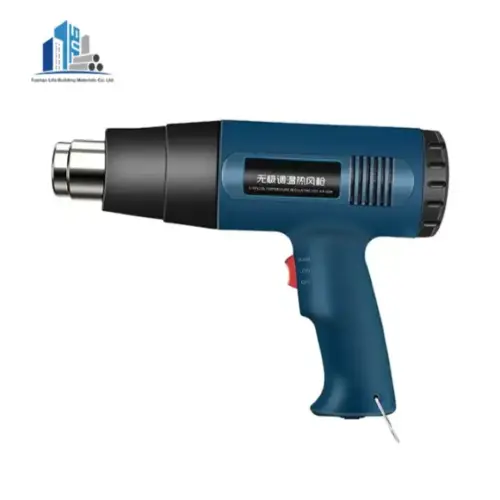
Understanding Power Requirements and Performance Specifications for Industrial High-Power Heat Gun Selection
When evaluating an Industrial High-Power Heat Gun for OEM production environments, power output serves as the foundation of heating performance, but raw wattage alone does not tell the complete story. Professional-grade units typically operate between 2000 to 2500 watts, with higher ratings supporting faster heat-up times and more consistent temperature maintenance under continuous operation. However, the relationship between power consumption and actual heat delivery depends heavily on internal component quality, including heating element design, insulation efficiency, and motor type. Brushless motors deliver superior longevity and smoother airflow distribution compared to traditional brushed designs, making them essential for production lines requiring extended daily operation without interruption. Temperature range represents another critical specification that directly impacts versatility across different manufacturing applications. Quality Industrial High-Power Heat Gun models offer adjustable ranges typically spanning from 60°C to 650°C, with digital displays providing precise monitoring and control. This wide temperature spectrum enables a single tool to handle diverse tasks including PVC welding at 160-400°C, paint stripping requiring 400-600°C, and delicate shrink-fitting operations at lower temperatures. Stepless temperature adjustment through continuously variable controls provides far greater flexibility than simple two-stage or three-stage fixed settings, allowing operators to dial in the exact temperature required for specific materials without risk of overheating or underperformance.
Evaluating Airflow Characteristics and Thermal Consistency
Airflow volume and velocity work in tandem with temperature to determine heating effectiveness in real-world production scenarios. Industrial-grade units typically deliver 300 to 500 liters per minute at velocities ranging from 3000 to 3400 feet per minute, creating the forceful heat transfer necessary for large-scale applications. When assessing airflow specifications, verify measurements are taken at standard operating distances rather than at the nozzle exit where readings can be artificially inflated. Quality manufacturers specify outlet temperature at defined distances such as 5mm, 10mm, and 20mm from the nozzle under controlled ambient conditions, providing realistic performance data that reflects actual working conditions. Thermal stability during continuous operation separates professional equipment from consumer-grade alternatives. An Industrial High-Power Heat Gun designed for OEM production must maintain consistent temperature output even during extended run times of 30 to 60 minutes or longer without thermal shutdown or performance degradation. Built-in overheat protection systems with automatic fan run-on cooling after power-off protect heating elements from premature failure and extend overall equipment lifespan. Digital display designs with feedback-controlled heating maintain set temperatures even when back-pressure from specialized nozzles or restricted working positions affects airflow, preventing scorching and reducing rework rates in precision applications.
Material Construction and Durability Factors in Industrial Heat Gun Design
The physical construction of an Industrial High-Power Heat Gun directly determines its ability to withstand the demanding conditions of industrial production environments. Professional units feature non-welded, thickened one-piece stainless steel heating tubes that provide superior heat dissipation and mechanical strength compared to segmented or thin-walled alternatives. This construction method eliminates potential failure points at joints and welds while maintaining structural integrity even after thousands of heating cycles. The heating element housing must incorporate high-temperature resistant materials with thermal barriers that protect external components from excessive heat transfer, preventing premature degradation of switches, cables, and electronic controls. Ergonomic design considerations become increasingly important when operators use equipment for extended periods throughout production shifts. Anti-drop construction with reinforced housing protects internal components from impact damage during typical industrial handling. Comfortable grip designs with heat-resistant materials and balanced weight distribution reduce operator fatigue, improving both safety and productivity. Strategically positioned temperature and airflow adjustment controls on the rear housing allow for quick modifications without interrupting work flow or requiring operators to reposition their grip. Integrated safety stands with reinforced construction provide stable hands-free operation at optimal working angles, essential for repetitive production tasks requiring consistent heating patterns.
Quality Control Through Component Selection
The quality of internal components determines long-term reliability and maintenance requirements for Industrial High-Power Heat Gun units in production settings. Universal motors designed for industrial applications provide exceptional run life and consistent performance under continuous heavy-duty operation, far exceeding the capabilities of motors designed for occasional consumer use. Heat-resistant heat shields positioned around critical components protect against radiant heat damage while dust-proof air inlet designs with integrated filtration prevent contamination that can compromise motor function and heating element efficiency in dusty manufacturing environments. Temperature control mechanisms range from basic mechanical thermostats to advanced proportional-integral-derivative systems that maintain precise temperature regulation regardless of operational variables. PID temperature control provides the highest level of accuracy, automatically adjusting power delivery to compensate for factors such as varying ambient temperatures, changing airflow restrictions, and extended operation periods. This sophisticated control prevents temperature overshoot and undershoot cycles that can damage sensitive materials or create inconsistent results across production runs. When combined with digital temperature displays showing real-time actual temperatures rather than just set points, operators gain the visibility needed to ensure consistent quality standards throughout manufacturing processes.
Safety Features and Compliance Standards for OEM Production Equipment
Safety certifications and compliance with international standards represent non-negotiable requirements for Industrial High-Power Heat Gun selection in OEM production facilities. CE marking for European markets, RoHS compliance for environmental safety, UL or ETL listing for North American applications, and other region-specific certifications ensure equipment meets mandatory safety and performance benchmarks. These certifications verify that thermal cutoff systems, electrical insulation, grounding provisions, and electromagnetic compatibility all meet rigorous third-party testing standards. Manufacturers offering complete documentation including user manuals, safety data sheets, and compliance certificates in multiple languages facilitate smooth regulatory approval processes for international operations. Built-in safety features protect both operators and equipment during normal production use and potential fault conditions. Automatic thermal shutdown systems monitor internal temperatures and cut power when safe operating limits are exceeded, preventing heating element burnout and reducing fire risks. Overheat protection with automatic fan run-on keeps airflow circulating after power cutoff to safely dissipate residual heat from heating elements and surrounding components. Heat-resistant nozzle designs with secure positive-lock or bayonet mounting systems prevent accidental detachment during operation while remaining cool enough for safe handling during nozzle changes between different production tasks.
Accessory Compatibility and Application Versatility
Comprehensive nozzle selection extends the versatility of an Industrial High-Power Heat Gun across diverse OEM production applications. Professional accessory kits typically include four to five specialized stainless steel nozzles designed for specific heating patterns and material types. Round reducer nozzles concentrate heat for precision work on small components, wide slot nozzles distribute heat evenly across flat surfaces for welding and forming operations, reflector nozzles wrap heat around pipes and cylindrical objects, glass-guard attachments protect delicate materials from direct airflow contact, and specialized welding nozzles optimize heat distribution for plastic joining applications. Secure attachment interfaces prevent loosening when nozzles heat up during extended use, maintaining proper heat direction and preventing safety hazards. The Industrial High-Power Heat Gun must seamlessly integrate with existing production workflows and equipment configurations. Cable length and durability affect working radius and resistance to damage from movement across production floors. Heavy-duty strain relief at connection points prevents cable separation from repeated flexing. Variable voltage options or universal input designs accommodate different electrical systems across international manufacturing facilities. Lightweight construction balanced against durability requirements allows for comfortable extended use without sacrificing the ruggedness needed for industrial environments where equipment may experience occasional impacts or drops during normal handling.
Supplier Evaluation Criteria for Long-Term OEM Partnerships
Beyond product specifications, the capability and reliability of your Industrial High-Power Heat Gun supplier significantly impacts operational continuity and total cost of ownership. Experienced manufacturers with dedicated R&D teams continuously improve product designs based on real-world industrial feedback, incorporating enhanced features that address common pain points in production environments. Companies maintaining extensive inventory for immediate shipment eliminate the production delays associated with extended lead times, particularly critical when replacing failed equipment or scaling up production capacity on short notice. Quality control processes including full inspection and testing of every unit before shipment reduce the likelihood of receiving defective equipment that disrupts production schedules. Flexible OEM and ODM capabilities allow customization of Industrial High-Power Heat Gun specifications to meet unique production requirements. Manufacturers offering design services can modify temperature ranges, adjust power outputs, incorporate specialized control interfaces, or develop custom nozzle configurations tailored to specific applications. Private labeling services enable branding consistency across your equipment fleet while benefiting from proven thermal performance and reliability. Technical support teams with deep expertise in industrial heating applications provide valuable guidance during equipment selection, helping match specifications to actual production needs rather than simply offering the highest-specification models regardless of suitability.
Global Supply Chain Considerations
For international OEM operations, supplier location and logistics capabilities influence delivery times, shipping costs, and ongoing support quality. Manufacturers based in established industrial regions like China's Pearl River Delta benefit from mature supply chains, skilled workforce availability, and proximity to component suppliers, typically translating to competitive pricing without compromising quality. Experience serving global markets spanning South America, European Union countries, Australia, Middle Eastern nations, and Southeast Asian regions demonstrates supplier capability to navigate diverse regulatory environments, customs procedures, and international quality standards such as ISO9001, ASTM, and DIN specifications. Comprehensive customer service extends beyond initial equipment delivery to encompass technical consultation, troubleshooting assistance, spare parts availability, and warranty support. Clear communication channels with multilingual support staff prevent misunderstandings that can delay problem resolution. Established relationships with international logistics partners ensure proper packaging standards that protect equipment during transit while optimizing shipping costs through efficient routing and consolidation. Suppliers offering competitive pricing structures with transparent cost breakdowns, flexible payment terms, and volume discounts enable better financial planning for large-scale equipment procurement across multiple facilities or production lines.
Conclusion
Choosing the right Industrial High-Power Heat Gun for OEM production requires careful evaluation of power specifications, construction quality, safety features, and supplier capabilities to ensure reliable long-term performance in demanding manufacturing environments.

Cooperate with Foshan Lifa Building Materials Co., Ltd.
As a leading China Industrial High-Power Heat Gun factory and China Industrial High-Power Heat Gun supplier, Foshan Lifa Building Materials Co., Ltd. offers High Quality Industrial High-Power Heat Gun solutions backed by ISO9001 certification and comprehensive international compliance. Our China Industrial High-Power Heat Gun manufacturer capabilities include extensive inventory for immediate shipment, competitive Industrial High-Power Heat Gun price structures, and flexible OEM/ODM customization. With Industrial High-Power Heat Gun for sale through our streamlined China Industrial High-Power Heat Gun wholesale channels, we serve 30+ countries with reliable products and expert technical support. Our experienced team combines R&D excellence, rigorous quality control, and professional communication to ensure your production requirements are met precisely. Partner with us to access cost-effective solutions without compromising on performance or safety standards. Contact our team today at wz@jiancaiqy.com to discuss your specific requirements and receive a detailed quotation. Bookmark this guide for future reference when evaluating equipment specifications or planning production expansions.
References
1. Thompson, R.J. & Martinez, S.K. "Industrial Heat Tool Performance Standards and Testing Protocols" - Journal of Manufacturing Equipment Technology, 2023
2. Chen, W. & Liu, H. "Quality Assurance in Industrial Heating Equipment Production: A Comprehensive Framework" - International Manufacturing Systems Review, 2024
3. Anderson, P.L. "Selection Criteria for Industrial Heat Tools in OEM Production Environments" - Industrial Engineering and Equipment Management, 2022
4. Kumar, A. & Schmidt, D. "Thermal Performance Analysis of Industrial-Grade Heat Application Tools" - Production Equipment Engineering Quarterly, 2023
5. Roberts, M.E. "Supply Chain Management for Industrial Equipment Procurement: Best Practices and Case Studies" - Global Manufacturing Procurement Journal, 2024
Learn about our latest products and discounts through SMS or email