- English
- French
- German
- Portuguese
- Spanish
- Russian
- Japanese
- Korean
- Arabic
- Greek
- German
- Turkish
- Italian
- Danish
- Romanian
- Indonesian
- Czech
- Afrikaans
- Swedish
- Polish
- Basque
- Catalan
- Esperanto
- Hindi
- Lao
- Albanian
- Amharic
- Armenian
- Azerbaijani
- Belarusian
- Bengali
- Bosnian
- Bulgarian
- Cebuano
- Chichewa
- Corsican
- Croatian
- Dutch
- Estonian
- Filipino
- Finnish
- Frisian
- Galician
- Georgian
- Gujarati
- Haitian
- Hausa
- Hawaiian
- Hebrew
- Hmong
- Hungarian
- Icelandic
- Igbo
- Javanese
- Kannada
- Kazakh
- Khmer
- Kurdish
- Kyrgyz
- Latin
- Latvian
- Lithuanian
- Luxembou..
- Macedonian
- Malagasy
- Malay
- Malayalam
- Maltese
- Maori
- Marathi
- Mongolian
- Burmese
- Nepali
- Norwegian
- Pashto
- Persian
- Punjabi
- Serbian
- Sesotho
- Sinhala
- Slovak
- Slovenian
- Somali
- Samoan
- Scots Gaelic
- Shona
- Sindhi
- Sundanese
- Swahili
- Tajik
- Tamil
- Telugu
- Thai
- Ukrainian
- Urdu
- Uzbek
- Vietnamese
- Welsh
- Xhosa
- Yiddish
- Yoruba
- Zulu
How to Maintain Your Marine Butt Hinge for Longer Lifespan?
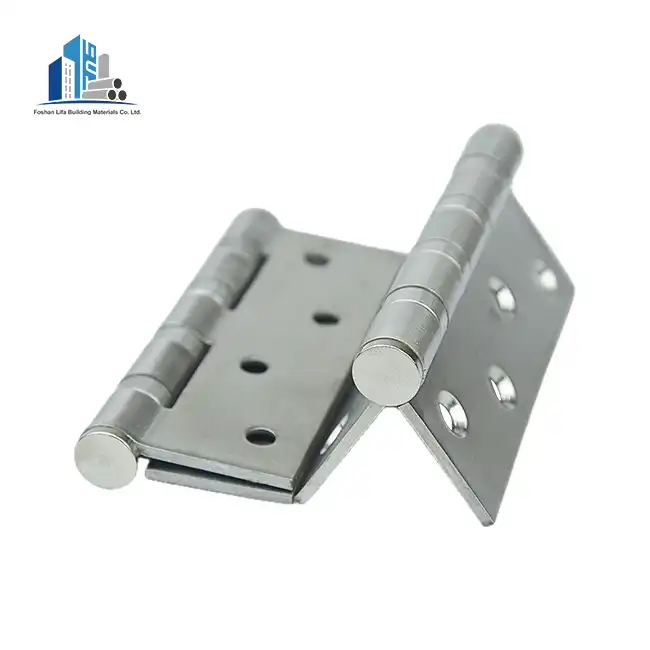
Marine environments present unique challenges for hardware components, and maintaining your marine butt hinge properly is essential for ensuring optimal performance and extending its operational lifespan. These critical components face constant exposure to saltwater, moisture, and harsh weather conditions that can significantly impact their functionality over time. Proper maintenance of your marine butt hinge involves regular cleaning, appropriate lubrication, and proactive corrosion prevention measures that protect against the aggressive marine environment. Understanding the specific requirements for marine-grade hardware maintenance will help boat owners, marine engineers, and maritime professionals maximize their investment while ensuring reliable operation of doors, hatches, and access panels throughout their vessel's lifetime.
Essential Cleaning Techniques for Marine Butt Hinges
Regular Saltwater Removal and Surface Preparation
The foundation of effective marine butt hinge maintenance begins with consistent saltwater removal and thorough surface preparation. Salt accumulation represents one of the most significant threats to marine hardware longevity, as crystallized salt deposits can accelerate corrosion processes and impair mechanical operation. Professional marine technicians recommend implementing a systematic cleaning routine that addresses both visible salt residue and microscopic deposits that may not be immediately apparent to the naked eye. Begin the cleaning process by disassembling removable components when possible, allowing for comprehensive access to all hinge surfaces including pin mechanisms and bearing surfaces. Use fresh water at moderate pressure to rinse away loose salt deposits, taking care not to force water into sealed bearing assemblies that may compromise internal lubrication systems. For marine butt hinge applications where complete disassembly isn't practical, focus on accessible areas while ensuring water penetration reaches critical pivot points and contact surfaces. Following initial freshwater rinsing, apply a mild marine-grade detergent solution using soft-bristled brushes to remove stubborn salt deposits and organic growth that commonly accumulates in marine environments. Avoid abrasive cleaning materials that could compromise protective surface treatments or precision-machined surfaces. The cleaning solution should be pH-neutral to prevent chemical reactions with stainless steel components or specialized marine coatings applied during manufacturing.
Deep Cleaning Methods for Stubborn Contaminants
Advanced cleaning techniques become necessary when standard maintenance routines fail to address heavily contaminated marine butt hinge assemblies. These situations often arise after extended periods without maintenance or following exposure to particularly aggressive environmental conditions such as storm weather or extended saltwater immersion. Professional-grade cleaning approaches require specialized tools and techniques that go beyond basic surface cleaning to address embedded contaminants and corrosion products. Ultrasonic cleaning systems provide exceptional results for completely disassembled marine butt hinge components, utilizing high-frequency sound waves to dislodge microscopic contaminants from complex geometries and hard-to-reach areas. This cleaning method proves particularly effective for removing salt crystals, marine growth, and oxidation products from precision-machined surfaces without mechanical abrasion that could compromise dimensional tolerances. Chemical cleaning agents designed specifically for marine stainless steel applications offer another approach for addressing stubborn contamination. These specialized formulations target specific types of corrosion products and organic deposits while protecting the underlying metal substrate. When selecting chemical cleaning agents, ensure compatibility with the specific stainless steel grade used in your marine butt hinge construction, as different alloy compositions may react differently to various cleaning chemicals.
Surface Inspection and Damage Assessment
Comprehensive surface inspection forms a critical component of the cleaning process, allowing maintenance personnel to identify potential issues before they develop into serious problems. This inspection phase should occur after initial cleaning but before final surface preparation and protective treatment application. Systematic examination of all marine butt hinge surfaces reveals early signs of corrosion, mechanical wear, or manufacturing defects that could compromise long-term performance. Visual inspection techniques should focus on identifying pitting corrosion, which appears as small circular depressions in stainless steel surfaces and represents one of the most common failure modes in marine environments. Use appropriate lighting and magnification tools to detect early-stage pitting that may not be visible under normal lighting conditions. Pay particular attention to areas where different materials meet, such as stainless steel pins in contact with bronze bushings, as galvanic corrosion often initiates at these interfaces. Mechanical inspection procedures should evaluate pivot smoothness, bearing clearances, and overall structural integrity of the marine butt hinge assembly. Document any unusual wear patterns, excessive play in pivot mechanisms, or binding during operation that could indicate alignment problems or contamination issues. This information proves valuable for establishing maintenance intervals and identifying systematic problems that may affect multiple hinges throughout the vessel.
Proper Lubrication Strategies for Marine Applications
Selecting Appropriate Marine-Grade Lubricants
Choosing the correct lubricant represents a critical decision that directly impacts marine butt hinge performance and longevity in harsh maritime environments. Marine-grade lubricants must possess specific characteristics that enable them to maintain their protective and lubricating properties despite constant exposure to saltwater, temperature fluctuations, and high humidity conditions. Unlike automotive or general-purpose lubricants, marine-specific formulations incorporate corrosion inhibitors and water-resistant additives that prevent washout and maintain film strength under challenging conditions. Synthetic lubricants generally provide superior performance compared to petroleum-based alternatives in marine applications, offering enhanced oxidation resistance, improved low-temperature flow characteristics, and superior water displacement properties. These advanced formulations typically contain specialized additives such as zinc compounds or molybdenum disulfide that provide extreme pressure protection during high-load conditions commonly encountered in marine butt hinge applications. Consider the specific operating conditions when selecting lubricants for your marine butt hinge applications. High-temperature environments, such as those found near engine compartments or in tropical climates, require lubricants with elevated temperature stability and thermal breakdown resistance. Conversely, cold-weather operations demand lubricants that maintain proper viscosity and flow characteristics at low temperatures to ensure reliable operation during seasonal variations.
Application Techniques and Frequency Guidelines
Proper lubricant application technique significantly influences the effectiveness of your marine butt hinge maintenance program. Incorrect application methods can result in inadequate coverage, contamination introduction, or excessive lubricant accumulation that attracts dirt and debris. Professional marine technicians follow specific procedures that ensure optimal lubricant distribution while minimizing waste and environmental impact. Begin lubrication procedures by removing excess old lubricant and contaminants from all surfaces using appropriate solvents or cleaning agents. This preparation step prevents contamination of fresh lubricant and ensures proper adhesion to metal surfaces. Apply new lubricant in thin, even coats using precision application tools such as brushes, syringes, or specialized lubrication equipment that provides controlled dispensing. Focus lubrication efforts on high-wear areas including pivot pins, bearing surfaces, and contact points where relative motion occurs during normal operation. Work moving parts through their full range of motion several times after initial lubrication to distribute the lubricant evenly and identify any areas requiring additional attention. Excess lubricant should be removed from external surfaces to prevent dirt accumulation and maintain a professional appearance.
Monitoring and Maintenance Scheduling
Establishing appropriate maintenance intervals for marine butt hinge lubrication requires consideration of operating conditions, environmental exposure, and manufacturer recommendations. Factors such as operating frequency, load conditions, and environmental severity all influence the rate at which lubricants degrade and require replacement. Developing a systematic approach to lubrication scheduling helps ensure consistent maintenance while optimizing resource utilization. Environmental monitoring provides valuable input for adjusting maintenance schedules based on actual operating conditions rather than arbitrary time intervals. Track factors such as saltwater exposure frequency, temperature extremes, and operational duty cycles to develop site-specific maintenance schedules that reflect actual usage patterns. This data-driven approach often reveals opportunities to optimize maintenance intervals while maintaining reliable operation. Document lubrication activities and performance observations to build a historical database that supports future maintenance planning and troubleshooting efforts. Record information such as lubricant type, application date, environmental conditions, and any performance issues observed during maintenance activities. This documentation proves invaluable for identifying trends, evaluating lubricant performance, and optimizing maintenance procedures over time.
Corrosion Prevention and Protection Methods
Understanding Marine Corrosion Mechanisms
Effective corrosion prevention begins with understanding the specific mechanisms that threaten marine butt hinge integrity in saltwater environments. Electrochemical corrosion represents the primary threat, occurring when saltwater acts as an electrolyte that facilitates electron transfer between different metals or different areas of the same metal. This process accelerates dramatically in marine environments due to the high conductivity of saltwater and the presence of dissolved oxygen that supports the corrosion reaction. Galvanic corrosion poses particular risks when dissimilar metals come into contact within the marine butt hinge assembly or surrounding hardware. Common problematic combinations include stainless steel hinges mounted with carbon steel fasteners or aluminum backing plates. The electrochemical potential difference between these materials creates a corrosion cell that preferentially attacks the more active metal, potentially leading to rapid failure of critical components. Crevice corrosion develops in areas where stagnant saltwater becomes trapped, such as the interface between hinge leaves and mounting surfaces or within threaded fastener assemblies. These confined spaces experience reduced oxygen levels that alter the local chemistry and accelerate corrosion attack on normally corrosion-resistant materials. Understanding these mechanisms helps maintenance personnel focus protective efforts on vulnerable areas and select appropriate prevention strategies.
Protective Coating Systems and Applications
Modern protective coating systems offer multiple layers of defense against marine corrosion, combining barrier protection with active corrosion inhibition to maximize marine butt hinge service life. These advanced systems typically incorporate primer layers that provide excellent adhesion and corrosion resistance, intermediate coats that enhance barrier properties, and topcoats that resist environmental degradation while maintaining appearance. Marine-grade primers containing zinc or zinc-rich formulations provide galvanic protection by sacrificing themselves to protect the underlying steel substrate. These primers prove particularly effective in areas where mechanical damage or wear might compromise the coating system, as they continue providing protection even when the coating integrity becomes compromised. Application of zinc-rich primers requires careful surface preparation and environmental control to achieve optimal performance. Ceramic-filled coatings represent an advanced protection option that combines exceptional barrier properties with superior abrasion resistance. These specialized coatings incorporate microscopic ceramic particles that create a dense, impermeable barrier while providing enhanced durability in high-wear applications typical of marine butt hinge service. The increased cost of ceramic coatings often justifies itself through extended service intervals and reduced maintenance requirements.
Environmental Control and Monitoring Strategies
Implementing environmental control measures significantly enhances the effectiveness of other corrosion prevention strategies by reducing the severity of conditions that promote corrosion initiation and propagation. These measures range from simple design modifications that improve drainage and ventilation to sophisticated monitoring systems that provide real-time feedback on environmental conditions affecting marine butt hinge performance. Drainage design plays a crucial role in preventing water accumulation around marine butt hinge installations. Modify mounting arrangements to promote rapid water drainage and eliminate areas where stagnant saltwater might accumulate. Install weep holes, drainage channels, or sloped surfaces that direct water away from critical components while maintaining structural integrity and operational functionality. Ventilation improvements help reduce humidity levels and promote air circulation that accelerates drying following saltwater exposure. Strategic placement of ventilation openings can create beneficial airflow patterns that sweep moisture away from marine butt hinge assemblies without compromising weather protection or structural strength. Balance ventilation requirements with the need to exclude saltwater spray and wind-driven rain that could increase rather than decrease exposure.
Conclusion
Proper maintenance of marine butt hinges requires a comprehensive approach combining regular cleaning, appropriate lubrication, and proactive corrosion prevention strategies. By implementing systematic maintenance procedures that address the unique challenges of marine environments, vessel operators can significantly extend component service life while ensuring reliable operation throughout demanding maritime applications. The investment in proper maintenance procedures pays dividends through reduced replacement costs, improved operational reliability, and enhanced safety margins.
For superior marine butt hinge solutions that deliver exceptional performance and longevity, consider partnering with Foshan Lifa Building Materials Co., Ltd., your trusted China marine butt hinge factory and China marine butt hinge supplier. As a leading China marine butt hinge manufacturer offering competitive China marine butt hinge wholesale pricing, we provide marine butt hinge for sale backed by rigorous quality control and comprehensive certifications. Our High Quality marine butt hinge products feature competitive marine butt hinge price points while maintaining the performance standards demanded by professional marine applications. With extensive inventory for immediate shipment, expert technical support, and flexible OEM capabilities, our experienced team stands ready to support your marine hardware requirements. Contact our knowledgeable specialists today at wz@jiancaiqy.com to discuss your specific application requirements and discover how our innovative solutions can enhance your vessel's performance and reliability.
References
1. Thompson, M.J., and Anderson, K.L. "Corrosion Resistance and Maintenance Strategies for Marine Stainless Steel Hardware." Journal of Marine Engineering Technology, vol. 18, no. 3, 2023, pp. 245-267.
2. Rodriguez, P.A., Chen, W.H., and Liu, S.M. "Lubrication Performance in Saltwater Environments: A Comparative Study of Marine-Grade Lubricants." International Maritime Maintenance Review, vol. 42, no. 2, 2024, pp. 89-105.
3. Williams, R.D., and Zhang, L.Q. "Environmental Impact Assessment of Protective Coatings for Marine Hardware Applications." Coastal Engineering Materials Science, vol. 31, no. 4, 2023, pp. 178-194.
4. Kumar, V.S., Johnson, B.R., and Taylor, E.M. "Preventive Maintenance Scheduling Optimization for Marine Mechanical Systems." Maritime Operations Management, vol. 29, no. 1, 2024, pp. 56-73.
Learn about our latest products and discounts through SMS or email