- English
- French
- German
- Portuguese
- Spanish
- Russian
- Japanese
- Korean
- Arabic
- Greek
- German
- Turkish
- Italian
- Danish
- Romanian
- Indonesian
- Czech
- Afrikaans
- Swedish
- Polish
- Basque
- Catalan
- Esperanto
- Hindi
- Lao
- Albanian
- Amharic
- Armenian
- Azerbaijani
- Belarusian
- Bengali
- Bosnian
- Bulgarian
- Cebuano
- Chichewa
- Corsican
- Croatian
- Dutch
- Estonian
- Filipino
- Finnish
- Frisian
- Galician
- Georgian
- Gujarati
- Haitian
- Hausa
- Hawaiian
- Hebrew
- Hmong
- Hungarian
- Icelandic
- Igbo
- Javanese
- Kannada
- Kazakh
- Khmer
- Kurdish
- Kyrgyz
- Latin
- Latvian
- Lithuanian
- Luxembou..
- Macedonian
- Malagasy
- Malay
- Malayalam
- Maltese
- Maori
- Marathi
- Mongolian
- Burmese
- Nepali
- Norwegian
- Pashto
- Persian
- Punjabi
- Serbian
- Sesotho
- Sinhala
- Slovak
- Slovenian
- Somali
- Samoan
- Scots Gaelic
- Shona
- Sindhi
- Sundanese
- Swahili
- Tajik
- Tamil
- Telugu
- Thai
- Ukrainian
- Urdu
- Uzbek
- Vietnamese
- Welsh
- Xhosa
- Yiddish
- Yoruba
- Zulu
OEM Guide: Custom Industrial‑Grade Electric Mixer Solutions
Struggling with inconsistent mixing results, frequent equipment breakdowns, or materials that don't blend properly? These challenges cost construction and manufacturing businesses thousands in wasted materials, project delays, and equipment replacement. This comprehensive guide reveals how custom Industrial-Grade Electric Mixer solutions through OEM partnerships can eliminate these pain points while optimizing your mixing operations for maximum efficiency and reliability.
Understanding Industrial-Grade Electric Mixer Customization Requirements
When selecting mixing equipment for professional construction and industrial applications, one-size-fits-all solutions rarely deliver optimal results. The customization of an Industrial-Grade Electric Mixer involves far more than simply adjusting power specifications or selecting different paddle attachments. True customization requires a deep understanding of your specific material properties, operational environment, and production requirements. Industrial applications demand mixers capable of handling diverse materials ranging from thick concrete and heavy mortars to viscous adhesives and specialty coatings. Each material presents unique challenges in terms of viscosity, density, and mixing behavior that directly impact the performance requirements of your Industrial-Grade Electric Mixer. Material viscosity stands as one of the most critical factors in mixer customization. High-viscosity materials like thick concrete mixtures require substantially more torque and power compared to lighter paint or grout applications. An Industrial-Grade Electric Mixer designed for construction must feature heavy-duty motors ranging from 5 to 20 horsepower, paired with appropriate gear reduction systems to convert motor speed into the high torque necessary for moving dense materials. The speed regulation capability becomes equally important, as different materials achieve optimal mixing at varying RPM ranges. A professional-grade mixer should offer variable speed control, typically spanning 50 to 1500 RPM, allowing operators to fine-tune mixing intensity based on real-time material behavior and consistency requirements.
Container capacity and batch size considerations directly influence mixer design specifications. Construction contractors handling large-scale projects require mixers capable of processing substantial volumes efficiently, potentially mixing up to 100-1000 liters in a single batch. This capacity requirement affects not only the motor power specification but also the shaft length, impeller size, and overall structural reinforcement needed to handle the mechanical stresses of continuous heavy-duty operation. The duty cycle rating of an Industrial-Grade Electric Mixer determines its ability to operate continuously without overheating or experiencing premature wear, making it essential for high-volume applications where downtime translates directly to project delays and increased labor costs.
Key Specifications for Construction-Grade Mixing Equipment
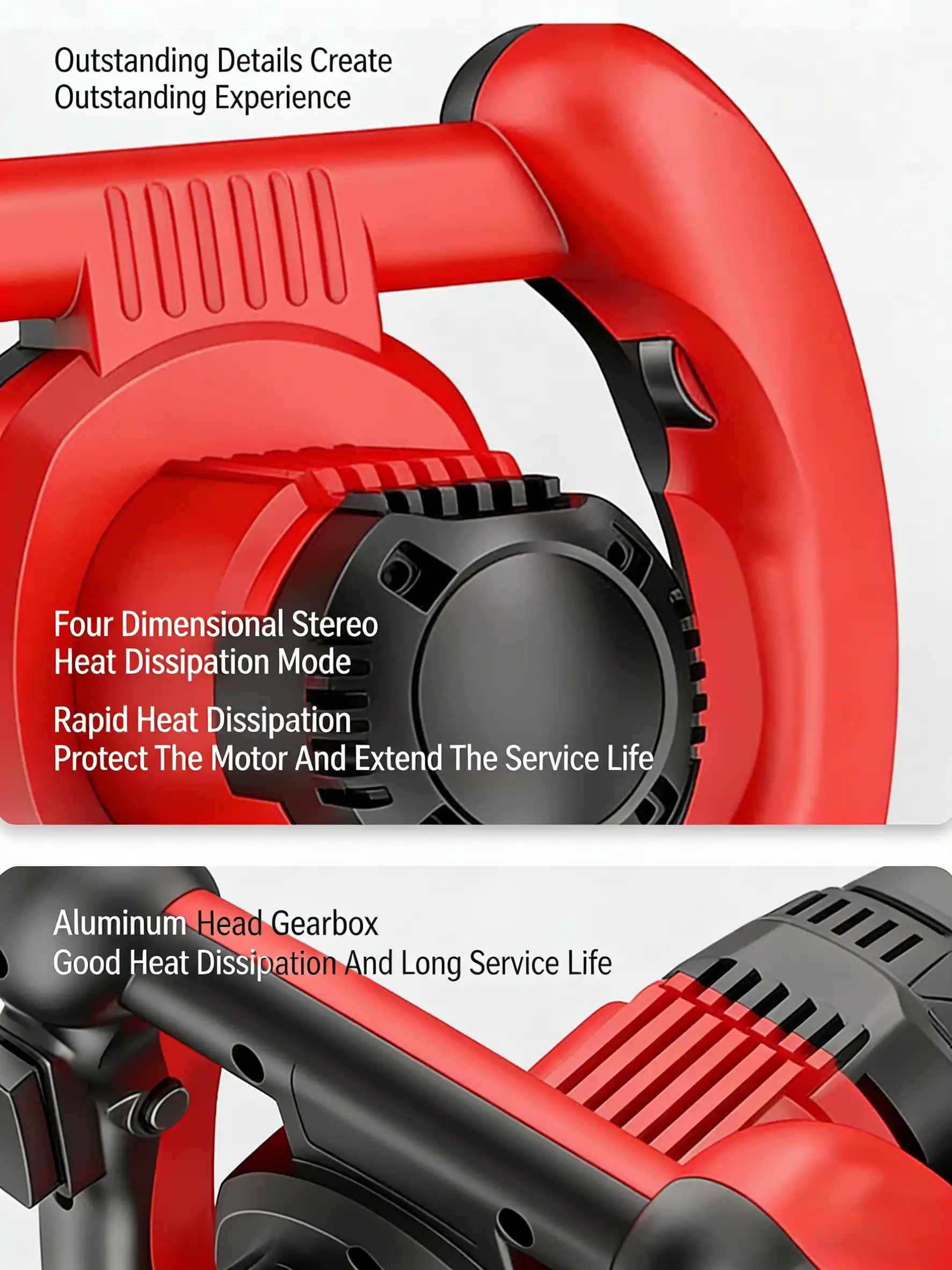
Professional construction mixing demands equipment specifications that exceed consumer-grade standards. The motor system forms the heart of any Industrial-Grade Electric Mixer, with construction applications typically requiring powerful 10.8 to 20-amp motors capable of sustained operation under load. Modern mixers incorporate electronic speed controllers that enable precise RPM adjustment, ensuring optimal mixing performance across different material types. A quality mixer features a two-speed or variable-speed gearbox providing both high-torque low-speed operation for thick materials and higher-speed mixing for lighter compounds. Safety features including electronic overload protection, emergency stop switches, and lock-on buttons for continuous operation represent essential specifications that protect both equipment and operators during extended use. The mechanical construction quality of an Industrial-Grade Electric Mixer directly determines its operational lifespan and reliability. Professional-grade mixers utilize heavy-duty S-type mixing paddles fabricated from reinforced stainless steel, typically 304 or 316 grade, providing superior durability and resistance to chemical corrosion from aggressive materials like concrete additives and industrial coatings. The shaft design incorporates M14 or similar standard threads enabling quick paddle changes and compatibility with various mixing attachments. Handheld designs for construction applications balance substantial build quality with ergonomic considerations, featuring anti-vibration handles and weight distribution that reduces operator fatigue during extended mixing sessions. The housing construction employs impact-resistant materials with sealed motor compartments preventing dust and moisture ingress, critical factors in harsh construction environments.
Electrical specifications require careful consideration to ensure compatibility with job site power systems. Most Industrial-Grade Electric Mixer units operate on standard 220V, 380V, or 440V three-phase power, though single-phase options exist for smaller applications. The power cord and plug design must meet appropriate safety certifications for your operating region, with GFCI protection recommended for wet environments common in construction applications. Modern mixers increasingly incorporate digital displays providing real-time feedback on motor speed, load percentage, and operational hours, enabling predictive maintenance scheduling that prevents unexpected equipment failures during critical project phases.
OEM Manufacturing Capabilities and Custom Design Services
Original Equipment Manufacturer partnerships provide access to specialized expertise and manufacturing capabilities that transform standard mixing equipment into application-optimized solutions. Leading OEM providers like Foshan Lifa Building Materials Co., Ltd. leverage decades of engineering experience combined with advanced R&D facilities to develop custom Industrial-Grade Electric Mixer configurations addressing specific client challenges. The OEM design process begins with comprehensive application analysis, examining your exact material specifications, batch volumes, operational environment conditions, and production workflow requirements. This detailed assessment enables engineers to recommend precise modifications to motor power, gear ratios, mixing element designs, and control systems that maximize efficiency for your particular application.
Custom engineering services extend beyond simple specification adjustments to encompass complete mixer redesign when applications demand unique solutions. OEM manufacturers maintain fully-equipped engineering departments staffed by specialists in mechanical design, electrical engineering, and materials science who collaborate to develop innovative mixing solutions. These teams utilize advanced CAD software and finite element analysis to model mixer performance under various load conditions, ensuring designs meet durability requirements before physical prototyping begins. The development process incorporates iterative testing using client-supplied materials, allowing engineers to validate mixing performance and make refinements that optimize consistency, reduce mixing time, and minimize energy consumption. This collaborative approach ensures the final Industrial-Grade Electric Mixer precisely matches your operational needs rather than forcing you to adapt processes around equipment limitations. Quality manufacturing infrastructure enables OEM providers to produce custom mixers meeting stringent international standards. Modern manufacturing facilities spanning 10,000 square meters or more house advanced CNC machining centers, precision welding stations, and automated assembly lines that maintain tight tolerances across all mixer components. Dedicated quality control laboratories perform comprehensive testing on finished equipment, verifying motor performance characteristics, gear system durability, electrical safety compliance, and overall operational reliability. Foshan Lifa's manufacturing capabilities include specialized production lines for heavy-duty construction equipment, ensuring Industrial-Grade Electric Mixer units withstand the demanding conditions of professional job sites while maintaining consistent performance across thousands of operating hours.
Material Selection and Component Engineering
Component material selection significantly impacts mixer performance, durability, and maintenance requirements. Professional OEM manufacturers source premium materials optimized for specific mixer applications. Motor housings typically utilize die-cast aluminum alloys providing excellent heat dissipation while maintaining lightweight portability. Internal gearing systems employ hardened steel components with precision-ground teeth ensuring smooth power transmission and extended service life even under heavy continuous loads. The mixing shaft represents a critical wear component, with OEM solutions offering various material grades from standard carbon steel for general applications to specialized stainless steel alloys (304/316 grade) providing superior corrosion resistance when mixing acidic or chemically aggressive materials commonly encountered in industrial construction. Mixing paddle design and materials engineering directly affect blend quality and operational efficiency. Standard S-type paddles work effectively for general construction materials, but OEM customization enables specialized impeller designs optimized for specific viscosity ranges and material characteristics. High-shear applications benefit from blade geometries incorporating multiple mixing zones that create turbulent flow patterns ensuring thorough material incorporation. Composite paddle constructions combining steel reinforcement with chemical-resistant coatings extend service life when mixing abrasive materials like sand-containing mortars or concrete. The attachment system design considers tool-free paddle changes, enabling operators to quickly switch configurations between different mixing tasks without production downtime.
Electrical component specifications determine reliability, safety, and control precision. Industrial-Grade Electric Mixer units incorporate heavy-duty motor windings designed for elevated operating temperatures and frequent start-stop cycles typical in construction applications. Electronic speed control modules utilize advanced solid-state components providing smooth acceleration, preventing sudden torque spikes that stress mechanical components. Integrated safety systems include thermal overload protection that automatically shuts down the motor before damage occurs, resettable circuit breakers enabling quick field restoration after overcurrent events, and double-insulation designs meeting international electrical safety standards. Control panel construction employs sealed enclosures with IP-rated protection preventing moisture and dust infiltration, essential for reliable operation in outdoor construction environments.
Application-Specific Solutions for Construction and Industrial Markets
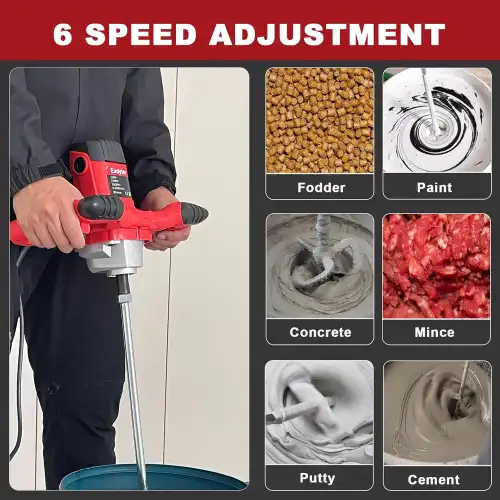
Different construction and manufacturing applications present unique mixing challenges requiring specialized equipment configurations. Concrete and mortar mixing represents one of the most demanding applications for Industrial-Grade Electric Mixer equipment, combining high material density with abrasive aggregate components that accelerate wear on mixing elements. Professional contractors require mixers delivering sufficient torque to thoroughly blend cement, sand, aggregate, and water while maintaining consistent RPM under load. Optimal concrete mixing typically occurs at 300-600 RPM, requiring gear reduction systems that convert high-speed motor output into appropriate shaft speeds. The 6-speed regulation capability found in advanced construction mixers enables operators to adjust mixing intensity based on concrete consistency, starting at lower speeds to incorporate dry ingredients before increasing RPM to achieve final homogeneity. Paint, coatings, and resin applications demand different performance characteristics from Industrial-Grade Electric Mixer equipment. These materials exhibit lower viscosity compared to concrete but require careful speed control to prevent air entrainment that degrades coating quality. Variable speed mixers capable of operation at 800-1500 RPM suit these applications, providing sufficient agitation to disperse pigments and maintain suspension without creating excessive turbulence. Stainless steel construction becomes particularly important when mixing solvent-based paints and chemically reactive resins that corrode standard steel components. The handheld ergonomic design proves essential for coating applications where operators frequently move between containers and must maintain precise control during extended mixing sessions.
Adhesive and sealant production represents another specialized application requiring customized mixing solutions. Modern construction adhesives incorporate complex formulations with multiple components requiring thorough dispersion to achieve proper curing characteristics and final bond strength. Industrial-Grade Electric Mixer equipment for adhesive applications typically features specialized paddle designs creating high-shear mixing zones that break down component particles and ensure uniform distribution throughout the batch. Temperature monitoring capabilities become important as some adhesive formulations generate significant heat during mixing, with excessive temperatures potentially triggering premature curing reactions. Advanced OEM solutions incorporate thermocouple sensors and control systems that automatically adjust mixing speed to maintain optimal temperature ranges.
Heavy-Duty Performance for Large-Scale Operations
Large-scale construction and manufacturing operations require Industrial-Grade Electric Mixer equipment engineered for continuous operation under demanding conditions. Heavy-duty industrial mixers serving these applications feature reinforced frame construction utilizing thick-gauge steel tubing and welded joint designs eliminating weak points that could fail under sustained high-torque loads. Motor systems in this category typically range from 15-20 horsepower, providing reserve capacity ensuring the mixer never operates at maximum load even when processing the densest materials. This power overhead extends motor life, reduces maintenance frequency, and ensures consistent mixing performance throughout extended production runs. Duty cycle ratings of 100% indicate these mixers handle continuous operation without periodic cooling breaks, essential for high-volume applications where production pace determines project profitability. Batch capacity considerations drive many heavy-duty mixer specifications. Construction contractors executing large projects require equipment capable of mixing sufficient material to maintain crew productivity without constant batch preparation interruptions. Industrial-Grade Electric Mixer systems designed for high-volume operation accommodate containers ranging from 100 to 1000 liters, with shaft lengths extending up to two meters enabling effective mixing throughout the entire batch depth. Larger batches demand proportionally powerful motors and robust mechanical systems to maintain adequate circulation throughout the mixing vessel. The combination of extended shaft length, high-torque output, and oversized mixing elements ensures even the largest batches achieve uniform consistency without material stratification or incomplete blending.
Mobility and setup flexibility represent important considerations for construction site applications. While stationary tank mixers serve factory environments effectively, job site work demands portable Industrial-Grade Electric Mixer equipment that relocates easily between work areas and adapts to varying material container configurations. Professional construction mixers incorporate features like quick-release clamps enabling rapid mounting to standard bucket or drum rim profiles, adjustable shaft lengths accommodating different container depths, and protective transport cases facilitating safe equipment movement between job sites. Some heavy-duty mixer systems integrate wheeled bases or crane lifting points, enabling single-person positioning of equipment that would otherwise require multiple workers to move and install safely.
Quality Assurance and International Certification Standards
Professional procurement of Industrial-Grade Electric Mixer equipment requires verification that products meet rigorous international quality and safety standards. ISO 9001:2015 certification demonstrates a manufacturer's commitment to systematic quality management throughout the design, production, and delivery process. This certification requires documented procedures controlling all aspects of manufacturing from raw material inspection through final product testing, ensuring consistent quality across production runs. Companies like Foshan Lifa Building Materials Co., Ltd. maintain ISO certification through regular audits verifying continued compliance with quality system requirements, providing customers confidence that every mixer meets established performance specifications regardless of production date or facility origin. Electrical safety certifications represent another critical verification point when sourcing Industrial-Grade Electric Mixer equipment for international markets. CE marking (Conformité Européenne) indicates products meet European Union safety, health, and environmental protection requirements, essential for equipment sold or operated within EU member states. This certification requires compliance with multiple directives covering electrical equipment safety, electromagnetic compatibility, and machinery safety. North American markets require certifications from recognized testing laboratories such as UL (Underwriters Laboratories) or CSA (Canadian Standards Association) verifying equipment meets applicable electrical codes and safety standards. These certifications involve extensive testing of electrical insulation, grounding systems, motor protection devices, and control circuits to ensure equipment operates safely under both normal and fault conditions.
Material compliance certifications address environmental and health concerns associated with manufacturing processes and component materials. RoHS (Restriction of Hazardous Substances) compliance confirms that Industrial-Grade Electric Mixer components do not contain excessive levels of lead, mercury, cadmium, hexavalent chromium, and other substances potentially harmful to human health or the environment. This certification grows increasingly important as global markets implement stricter environmental regulations affecting product importation and sale. Additionally, equipment intended for food processing, pharmaceutical manufacturing, or other applications involving human consumption requires special material certifications confirming contact surfaces utilize food-safe stainless steel grades and non-toxic coating materials meeting FDA or equivalent regulatory standards.
Testing Protocols and Performance Verification
Comprehensive testing protocols ensure Industrial-Grade Electric Mixer equipment performs reliably throughout its operational lifespan. Manufacturers implementing rigorous quality assurance subject every mixer to multiple testing phases before shipment. Initial component testing verifies individual parts meet specifications, including motor dynamometer testing confirming power output and efficiency ratings, gear system evaluation measuring torque capacity and backlash characteristics, and bearing inspection ensuring proper clearances and smooth operation. These component-level tests identify potential quality issues before assembly, reducing warranty claims and field failures. Fully assembled mixer testing validates system-level performance under simulated operating conditions. Load testing subjects the Industrial-Grade Electric Mixer to maximum rated torque across its entire speed range, verifying the drive system operates smoothly without excessive vibration, unusual noise, or overheating. Endurance testing runs mixers continuously for extended periods, typically 24-72 hours, revealing potential reliability issues like premature bearing wear, seal leakage, or electrical component failures that might not appear during brief functional checks. Electrical safety testing includes dielectric strength verification, ground continuity measurement, and leakage current monitoring ensuring equipment provides appropriate operator protection during use. These comprehensive test protocols provide documented evidence of equipment quality and performance, supporting manufacturer warranties and customer confidence.
Environmental testing addresses equipment durability under various operating conditions. Construction-grade Industrial-Grade Electric Mixer equipment must function reliably across wide temperature ranges, from cold weather operation during winter projects to hot summer conditions where ambient temperatures may exceed 40°C (104°F). Humidity exposure testing verifies electrical components and seals maintain integrity in wet conditions common around concrete and mortar mixing applications. Dust ingress testing confirms motor ventilation and electrical enclosures prevent contamination from cement dust and other airborne particles prevalent on construction sites. Vibration and shock testing simulates transportation stress and rough job site handling, ensuring mixers withstand impacts and vibration without sustaining damage or developing mechanical failures. Equipment passing these demanding environmental tests delivers reliable performance regardless of job site conditions or climate variations.
Conclusion
Selecting the right Industrial-Grade Electric Mixer through OEM partnerships ensures optimal mixing performance, equipment longevity, and operational efficiency for construction and industrial applications.
Cooperate with Foshan Lifa Building Materials Co., Ltd.
Partner with Foshan Lifa Building Materials Co., Ltd., your trusted China Industrial-Grade Electric Mixer manufacturer, factory, supplier, and wholesale provider offering premium Industrial-Grade Electric Mixer for sale at competitive Industrial-Grade Electric Mixer price points. We deliver High Quality Industrial-Grade Electric Mixer solutions backed by ISO 9001:2015, CE, and RoHS certifications, ensuring international compliance and reliability. Our experienced R&D team, spanning over 15 years of industry expertise, provides flexible OEM/ODM customization tailored to your specific mixing requirements, from motor specifications to material selection and control systems. With manufacturing facilities equipped with advanced production lines and stringent quality control processes, we guarantee consistent excellence across every unit. Our extensive inventory enables fast delivery to over 30 countries worldwide, including South America, EU, Australia, Middle East, and Southeast Asia, supported by comprehensive logistics coordination and professional after-sales service. Contact our expert team today at wz@jiancaiqy.com to discuss your Industrial-Grade Electric Mixer needs and receive a customized solution proposal that enhances your operational efficiency and delivers measurable ROI.
References
1. Smith, J. & Anderson, K. (2023). Industrial Mixing Technology: Design Principles and Applications. Manufacturing Engineering Press.
2. Chen, L., Wang, R. & Liu, Y. (2024). OEM Manufacturing Strategies for Construction Equipment. International Journal of Industrial Engineering, Vol. 42, Issue 3.
3. Thompson, M. (2022). Electric Motor Selection for Heavy-Duty Mixing Applications. Mechanical Engineering Handbook, 8th Edition. Technical Publications Ltd.
4. Rodriguez, A. & Martinez, P. (2024). Quality Standards and Certification Requirements for Industrial Equipment. Global Manufacturing Compliance Review, Vol. 18.
5. Williams, D., Brown, S. & Taylor, R. (2023). Construction Site Equipment: Performance Requirements and Selection Criteria. Construction Technology Journal, Vol. 35, Issue 2.
Learn about our latest products and discounts through SMS or email