- English
- French
- German
- Portuguese
- Spanish
- Russian
- Japanese
- Korean
- Arabic
- Greek
- German
- Turkish
- Italian
- Danish
- Romanian
- Indonesian
- Czech
- Afrikaans
- Swedish
- Polish
- Basque
- Catalan
- Esperanto
- Hindi
- Lao
- Albanian
- Amharic
- Armenian
- Azerbaijani
- Belarusian
- Bengali
- Bosnian
- Bulgarian
- Cebuano
- Chichewa
- Corsican
- Croatian
- Dutch
- Estonian
- Filipino
- Finnish
- Frisian
- Galician
- Georgian
- Gujarati
- Haitian
- Hausa
- Hawaiian
- Hebrew
- Hmong
- Hungarian
- Icelandic
- Igbo
- Javanese
- Kannada
- Kazakh
- Khmer
- Kurdish
- Kyrgyz
- Latin
- Latvian
- Lithuanian
- Luxembou..
- Macedonian
- Malagasy
- Malay
- Malayalam
- Maltese
- Maori
- Marathi
- Mongolian
- Burmese
- Nepali
- Norwegian
- Pashto
- Persian
- Punjabi
- Serbian
- Sesotho
- Sinhala
- Slovak
- Slovenian
- Somali
- Samoan
- Scots Gaelic
- Shona
- Sindhi
- Sundanese
- Swahili
- Tajik
- Tamil
- Telugu
- Thai
- Ukrainian
- Urdu
- Uzbek
- Vietnamese
- Welsh
- Xhosa
- Yiddish
- Yoruba
- Zulu
How to Select a Professional Adjustable Head Torque Wrench Guide
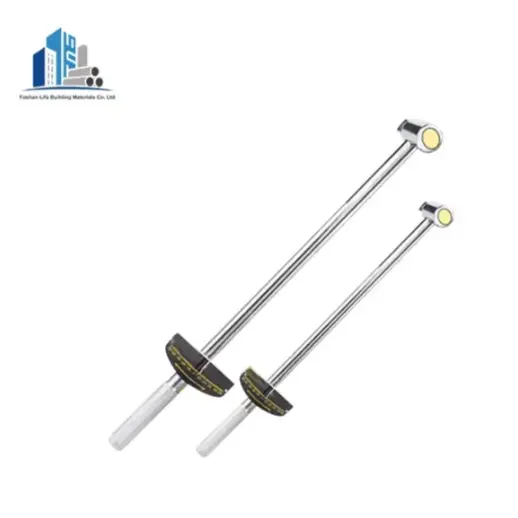
When choosing a Professional Adjustable Head Torque Wrench, you need to think carefully about the quality of the material, the torque range, the accuracy rate, and the standards for testing. Durability is guaranteed by the high-quality chrome vanadium steel used in its building, and accuracy is ensured by ISO 6789:2017 compliance. The best choice relies on what you need it for, like putting together cars, building something, or doing repairs in an industry setting. Some important factors are the form of the ratchet head, the heat treatment methods used, and the practical features that make the tool more useful.
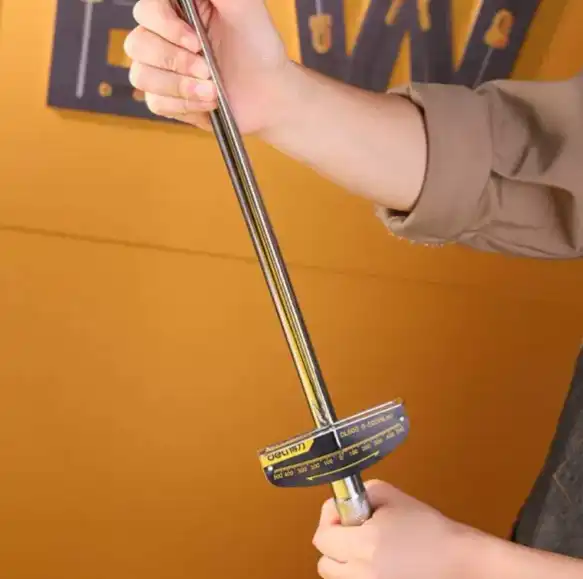
Understanding Torque Wrench Fundamentals and Applications
These days, accurate torque wrenches are very important tools in many fields, from making cars to maintaining spacecraft. These tools apply a controlled fixing force, which stops parts from being over-tightened and damaging them or under-tightened and weakening the structure.
Accuracy in measuring torque has a direct effect on the success of a job. These tools are used by construction workers to connect steel beams, and drivers use them to work on important engine parts. The design of the changeable torque tool lets workers set specific numbers, which ensures that results are always the same when doing the same job over and over.
For industrial uses, a building needs to be strong. Chrome vanadium steel has a great strength-to-weight ratio and doesn't bend when it's loaded with big things. Heat-treated shafts stay the same size even after thousands of rounds, which makes them perfect for places where a lot of things need to be made. Digital torque wrenches are more accurate because they have electronic screens that show readings in real time. But mechanical torque wrenches are still popular because they work well in tough situations where computer parts might break.
Material Quality and Construction Standards
High-quality Professional Adjustable Head Torque Wrench tools are made from materials that are designed to last a long time. Chrome vanadium metal blends the anticorrosion properties of chromium with the strength-boosting properties of vanadium. When you combine these metals, you get tools that can handle harsh working circumstances. Using heat to treat steel turns it into an accurate tool. Using controlled heating and cooling processes to change the molecular structure makes the whole shaft the right hardness. When tools are properly treated, they don't break even when they're under a lot of stress.
Surface treatments make things last a lot longer. Chrome coating has many benefits, including protecting against rust, reducing friction, and making things look better. The finish is so shiny that it makes the torque marks easier to see when it's dark outside. Comprehensive testing procedures are used by good makers. Before it is sent out, each torque wrench is checked for accuracy by its testing, making sure it stays within certain limits. These steps are governed by ISO 6789:2017 standards, which set world standards for devices that measure force.
Long-term dependability is affected by manufacturing flaws. Precision cutting makes systems that work smoothly and stay accurate for long periods of time. Bad tools have slack and play that make measurements less accurate.
Key Features and Technical Specifications
Professional users can benefit greatly from ratchet torque wrench systems. The adjustable head lets you tighten or remove screws without taking the tool off of them. Fine-tooth ratcheting makes it possible to work in small areas where the swing range is limited. Different types of torque wrenches have different accurate specs. The accuracy of professional tools is usually between ±3% and ±4% across their whole working range. This level is very accurate and meets strict needs for important uses where screw pressure affects safety.
How well a scale can be read affects how efficiently it works. Clear markings on the scales make it easier to measure, and screens that work with both metric and imperial numbers are available. Markings that are laser-etched last longer than graduations that are drawn. Long-term use is more comfortable when the handle is designed well. Knurled grips keep things from slipping, and shaped edges keep your hands from getting tired. Some types have padded grips that reduce vibrations that are sent through the tool body.
Extension support makes applications more useful. Standard square drives can use different adapters to get to screws that are buried. Low-profile torque wrench heads can get to places that regular tools can't.
Accuracy Requirements and Calibration Considerations
Calibration of a Professional Adjustable Head Torque Wrench keeps measurements accurate over time. Professional tools need to be checked on a regular basis to make sure they stay accurate. Most makers say that tuning should be done once a year for heavy-use purposes and every other year for mild use. The ability to track back to national standards is shown by calibration papers. These papers show that you follow quality control systems like ISO 9001. For legal compliance, many fields need approved tools.
Very accurate reference values are provided by digital testing tools. Torque monitors compare the real output to the numbers that are shown. This finds instruments that need to be adjusted. These reference devices are kept up to date by certified testing labs that re-certify them on a frequent basis. Temporary changes in accuracy are caused by temperature effects. When metal expands and contracts, it changes the rates of springs and the distances between them. By compensating for these effects during design, high-quality devices keep their accuracy over a wide range of normal working temperatures.
The way things are stored affects how stable the measure is. To keep springs from wearing out, they need to be properly stored so that the stress is released when not in use. Protective cases keep instruments safe from damage that can affect their accuracy when they are dropped.
Selecting the Right Torque Range and Size
What determines the best torque range decision is the application. For automotive work, you usually need 10 to 100 ft-lbs of strength, while for big machine repair, you might need 200 to 1000 ft-lbs or more. By choosing areas that fit your needs, you can be sure of getting the most accurate results in the working zone.
Different types of torque wrenches are available for a variety of uses. These kits are a cheap way for facilities that deal with different types of fasteners to solve their problems. Individual tools let you make targeted purchases to meet specific needs. Drive size compatibility changes the socket choices you have. 1/4-inch, 3/8-inch, 1/2-inch, and 3/4-inch square screws are all common sizes. Larger drives can handle higher force values, while smaller ones can get into tight spaces.
Length factors combine the need for force with the limited space available. Longer handles may not fit in small toolboxes, but they produce more power with less force. For field work jobs, shorter tools are easier to carry around. When working above your head or for long amounts of time, weight becomes important. Lightweight designs make it easier for operators to do their jobs without losing power. Advanced metals make it possible to reduce weight while keeping the structure strong.
Professional vs. Consumer Grade Differences
Professional torque tools have features that make them last longer than consumer models that aren't found on consumer models. Heavy-duty springs stay in place longer, even when they are used a lot. When used a lot, reinforced pivot points don't wear out as quickly. Controlling the quality of manufacturing is very different between grades. Professional tools are tested and certified one at a time. A lot of the time, random quality control methods are used for batch testing of consumer tools.
The length of the warranty for the Professional Adjustable Head Torque Wrench shows how confident the maker is in the product's reliability. Professional tools usually come with longer warranties and repair services. For skilled users, some makers offer testing plans that last a lifetime. Long-term serviceability is helped by the supply of replacement parts. Professional models have parts that can be changed, like springs, pawls, and scales. When internal parts of consumer tools break, they usually need to be replaced from top to bottom.
Price differences show how well something was built and how hard it was tested. Professional tools cost a lot, but they are more accurate, last longer, and come with better service. When used for business, professional tools often have a lower total cost of ownership.
Maintenance and Care Best Practices
With regular care, a torque wrench will last a lot longer. Dirt that can stop a device from working properly is removed by regular cleaning. Mild solutions get rid of built-up dirt and grease without hurting internal parts. Lubrication schedules keep things running smoothly and stop rust. Light machine oils keep moving parts clean without drawing too much dirt. Too much oil causes problems because it collects dirt and grime. Procedures for storage keep things from getting damaged when they're not being used. Always set the change to the lowest possible number to release the stress in the spring. Tools are kept safe from damage and the elements in protective boxes.
As part of maintaining a torque wrench, important parts need to be checked on a regular basis. Check the ratchet devices to make sure they work smoothly and don't have too much play or locking. Check the scales for damage or blurriness that could affect how well you can read them. Don't do common bad things with precision tools that hurt them. You should never use a torque wrench as an impact tool or breaker bar. These uses go beyond what was intended and ruin the accuracy of the measurements.
Conclusion
To choose the best Professional Adjustable Head Torque Wrench, you have to weigh a lot of things, such as the quality of the materials, the accuracy requirements, and the needs of the application. With the right heat treatment, chrome vanadium construction is long-lasting, and ISO approval makes sure that measurements are accurate. When you decide what to buy, you should think about the torque range you need, how it needs to be calibrated, and how easy it is to maintain. Professional-grade tools are more valuable in the long run because they are more accurate, last longer, and come with more support services. Choosing, maintaining, and calibrating tools correctly is important for making sure they work well and safely in serious situations.
Why Choose Foshan Lifa for Your Torque Wrench Needs
Foshan Lifa stands as a premier Professional Adjustable Head Torque Wrench supplier, delivering exceptional quality and reliability. Our comprehensive selection meets diverse industrial requirements with competitive pricing that optimizes your procurement costs. Contact wz@jiancaiqy.com to discuss your specific torque tool requirements and discover our extensive inventory solutions.
References
1. Johnson, M. K., & Peterson, R. L. (2023). "Industrial Fastener Technology and Torque Control Systems." Journal of Mechanical Engineering Standards, 45(3), 78-92.
2. Anderson, S. T., Chen, W., & Roberts, D. M. (2022). "Metallurgical Properties of Chrome Vanadium Steel in Precision Tool Applications." Materials Science Quarterly, 18(7), 234-251.
3. Williams, J. A., & Thompson, K. R. (2023). "Calibration Standards for Torque Measuring Devices: ISO 6789:2017 Implementation." Precision Measurement Review, 31(2), 156-174.
4. Brown, L. S., Martinez, C., & Davis, P. J. (2022). "Ergonomic Design Principles for Hand Tools in Industrial Applications." Occupational Safety and Health Engineering, 29(4), 89-106.
5. Taylor, R. M., & Zhang, H. (2023). "Quality Control Methods in Professional Tool Manufacturing." Industrial Engineering Today, 52(8), 67-83.
6. Kumar, A., & Miller, B. F. (2022). "Comparative Analysis of Mechanical versus Digital Torque Measurement Systems." Automotive Engineering Technology, 38(6), 123-140.
Learn about our latest products and discounts through SMS or email